
excerpt
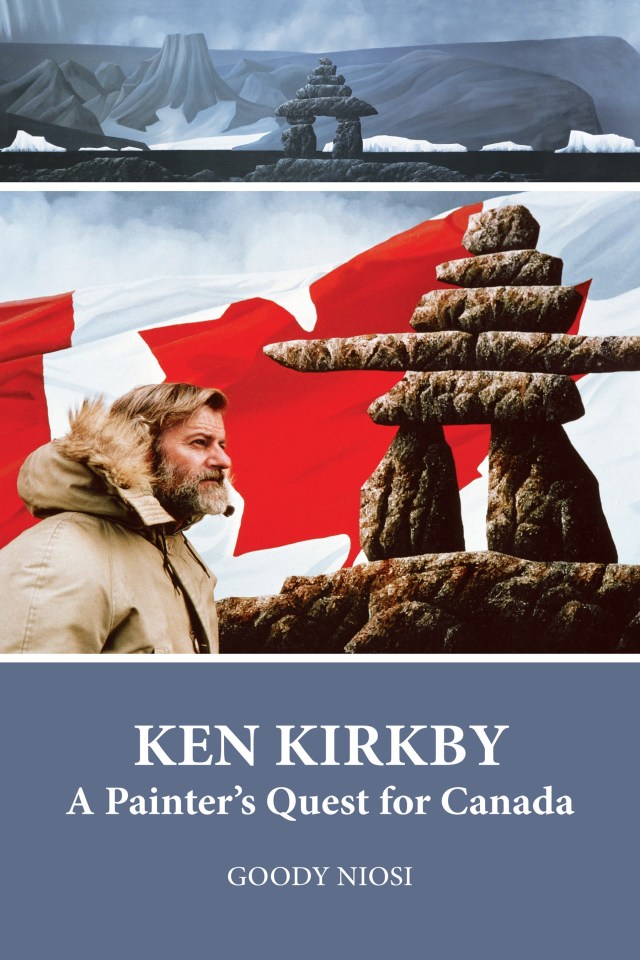
They were marvelling at the line of diminutive Inuksuit that curved along
the water’s edge toward a far-off boulder that seemed to reach almost fifty
feet into the sky. The Inuksuit told a story, Ken said, and after a lunch of
fresh fried fish he led them toward the boulder. As they walked the boulder
diminished in size until they stood beside it and found it was about
three feet tall, pink, perfectly smooth, and resting on top of an immense
gray rock that had been partially heaved out of the tundra.
“This is a fishing Inukshuk,” he told them. “It tells you that this is a
good place to go fishing. How does it say that? If the fishing is good, the
Inuit take a stone out of the water and put it on top of another stone
with little Inuksuit leading the way. A passerby who had never been in
this land would know immediately that he could catch fish here. Other
configurations of stone describe what kind of fish are here. Essentially,
this is a language.”
He explained that the permafrost lurks just under the surface of the
tundra, and below that lay thousands of feet of ice. The ground above the
permafrost where the ice melted consisted almost entirely of rich humus
built up over eons by the tiny plants that grew and died there. An eightinch
tree takes hundreds of years to grow to that height in the Arctic’s
short season. The fibres of the humus stretched out along the surface and
down to the permafrost, siphoning the water from the ice and sending it
into the atmosphere. As the wind travelled across the surface of the land
in buffeting gusts, it created rudimentary magnifying lenses of the millions
of tiny water bubbles streaming into the air. The farther away you
were from an object the more lenses you were looking through and the
larger the distant object appeared.
That night after supper he walked down to the dock with a fly-fishing
rod. Arctic grayling congregated in the shallows here and after a few causal
casts, he landed a fine three-pound fish. As he unhooked it and slipped
it back into the water he noticed Karen sitting on an overturned bucket
at the far end of the dock.
“I’d like to try that,” she said.
He handed her the rod and described the process but even after all
these years he still had no idea how to explain that it was a line with no
weight and it needed to fly guided by minimal strength and energy, and
perfect timing.
She cast a couple of times and smiled. “I like this,” she said and while
the fly lay on the water, a large grayling took the bait. Ken disengaged it,
gave the rod back to her and left her to sort out the tangles and continue
casting. He sat on the overturned bucket at the far end of the dock and
watched.
 Manolis Aligizakis