
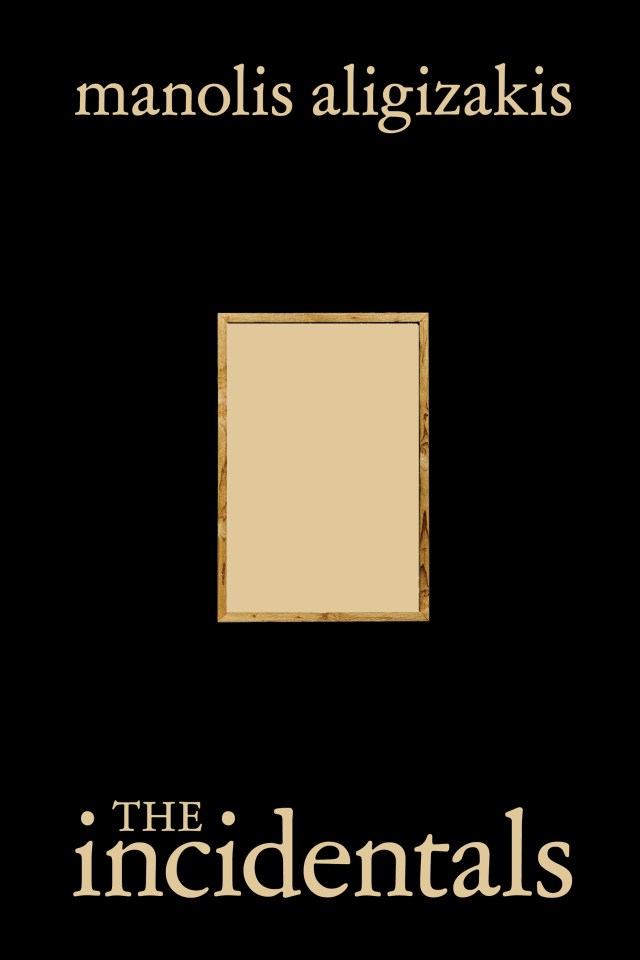
The Dignity of Lives Deemed Incidental
The postman in Mail moves from house to house carrying news of marriages, births, and children living far away. For everyone else, he is the bearer of messages, while tears run down his face because he too waits for a letter that never arrives.
Here lies one of Aligizakis’s strongest poetic gifts: his ability to create an entire human destiny from a few concrete gestures.
He does not write psychological portraits in the conventional sense. Of many of his characters we know almost nothing. We are given an occupation, a gesture, a memory, an object.
The rest is accomplished by metaphor. The net becomes a trap. The rope becomes a life.
Bookkeeping becomes an account with death.
The felling of a tree becomes an image of our own disappearance. The letter becomes a metaphor for absence. The shoe becomes the sign that, for a little while longer, we may still walk upon the earth.
This poetic world is at once archaic and contemporary. Hades and Thanatos move naturally through gas stations, diners, hospitals, stock-market screens, garages, and Canadian immigration offices. For Aligizakis, Greek mythology is not museum material but a still-living language through which human finitude can be expressed.
The immigrant is therefore a particularly significant figure. In Immigrant, the protagonist leaves his homeland to begin a new life on the other side of the planet. He promises his youth and productive years to the new country in exchange for security—but the poem’s ruthless conclusion suggests that in doing so he has, in a sense, sold himself “for a few dollars more.”
This experience carries particular resonance in the work of a poet whose own biography has been shaped by emigration. Yet Aligizakis does not write autobiographical complaint. Migration becomes another model of the human condition: we all make exchanges with the world. We give time for money, freedom for security, dreams for predictability. The only question is whether we are aware of the contract we have signed.
The Incidentals is not a comfortable book. Nor does it wish to be.
It is often rough, grotesque, ironic, sometimes sarcastic. It refuses to beautify the body, old age, labour, or death. Aligizakis occasionally uses brutal language to awaken the reader from precisely the complacency he wishes to attack.
Yet beneath this harshness lies an unusual humanism.
Because if these people were truly incidental, no poems would be written about them.
Poetry itself refutes the title.
The moment the poet writes about Gladys, Mathew, Stefan, Benjamin, Galanos, or the nameless postman, he abolishes their insignificance. He lifts them out of the anonymous mass of time. Society may have counted them as numbers, but poetry gives them names, faces, stories, and deaths.
This is perhaps the most beautiful ethical gesture of the volume. Poetry cannot defeat death.
But it can defeat oblivion—if only for the duration of a poem.
Manolis Aligizakis’s The Incidentals is therefore far more than a collection of poems about ordinary people. It is at once a modern dance of death, a social diagnosis, a sequence of philosophical parables, and an ironic catalogue of human existence. The volume asks how many people live out their lives without ever daring to move away from the stake to which an invisible rope has tied them.
And it asks an even more difficult question: how long is the rope on which we ourselves live?
The poet cannot answer that question for us.
Perhaps this is precisely the point at which the stories of the „incidentals” cease to be the stories of others. And ours begins.
Balázs F. Attila
poet, writer, editor

