Who has kept all these for us, then, with such exactness and such applications, washed, pleasant, cleaned up and tidied, scratched by wounds and death? And the red river all around the house nothing, crystal clear water from the day before yesterday rain, warmish rain reflecting the reddish sundown until late in the evening, to the hour when that diaphaneity is spread, immense, glassy, and you see the indestructible, the invisible in that immenseness, indestructible and invisible as you are too surrounded by the whispers of the furniture and the stars. Mother sits in her engraved chair and embroiders her endless handiwork under the light of the oil lamp with the shivering flame as a light current is coming through the two windows and father has been away hunting since morning and the melancholy sound of the hunter’s horn reaches his ears along with the friendly barking of the impatient dogs…
He still won’t talk about Nick, he won’t talk about Tanya, his own dear mini-model girl, his lost dream. He is fatter; and insists on wearing a regulation striped shirt and one of Her Majesty’s grey jackets. Pauline chides him for showing off. “They’re good, these porridge-jackets. Cult collectables, as soon as I get back in the business. ” But he won’t say what business, or discuss concluded business, except in general terms. He smiles wrily at the thin brown curtains, the broken Dansette record player, a chaos of books and one small picture, a last retrieved treasure, on the damp wall —an ancient engraving of a bearded man holding a complex structure, like triangulations of spherical retorts, radiating light. She asks him about it —an old alchemist, a cabbalist or whatever? She has to say something. He forces a hollow laugh and taps the dusty glass. “I’m told it’s by Paulus Ricius, Augsburg 1516. Beautiful, isn’t it? God knows what it means. All my alchemists turned to fool’s gold. At one point, I had a guy with a PhD. brewing pure acid for me, I had two guys specialising in THC oil, and they all turned rotten on me, turned Queen’s Evidence. You wouldn’t believe I had a gold Ford Thunderbird, and whole wardrobes of money . . . I could have given you enough bread to ransom Lucas three times over.” But in Larry’s professional opinion, Lucas hasn’t been kidnapped. The boy might be on a little caper, perhaps, he’s at an age when the nerves are good. But he’ll be back, give him a chance. Larry believes that Lucas is more stable than Nick. “It’s your civilising influence,” he says softly, with a slow smile that transforms his rough-cast mock-up of a face. She wonders if he’s remembering their distant dark-age act of hurried unbuttoning, A tiny moment swirling into non-being. She’s let go. But has he? “That’s the trouble with inside—no women. Just piles of demented men.” She hopes he’s going to say more about Nick and Lucas but he’s back to a re-run of prison life. It was a monastery with real mediaeval penances. This vicar was a nonce who spanked young choirboys, so they made him run around barking on all fours with a burning blue paper up his arse. Branded on the bum, as old Geoffrey Chaucer puts it. “Larry, I really need your help . . .” She goes into explicatory overload, the whole construct sounding more and more implausible as her words fill the dingy room and the clock ticks.
…and from the narrow shores of Bosporus green cities made of sprouts and fountains rose; blossoms looked like fairies flowing, descending in cisterns: jewels, rain full of red precious stones. And the sun reflected onto the Bithynian mountains to the Vlaherne and Magnavre palaces which unobstructedly rose and gleamed up high and from the Golden Gates to the Heptapyrgion up to the end of stranded emerald islands legions of palaces and armies of monasteries as if the spells of witches were cast upon them and they spread over the domes and mansions and you shone oh my soul over all the motionless crosses and the cypresses.
Chores You ask the silent mountains to bring the morning to craft the trees’ shade your heart to be concealed by fog flower that vanished behind a curtain of pain and you got up to stare into the eyes of another sunny day motive for thoughts you had of him to trim the maple and to spread some fertilizer over the flower beds when familiar anguish attacks you beauty passes by your irises benevolence doesn’t impress you and you have missed another innocent moment like his voice and his tender arm over your shoulders.
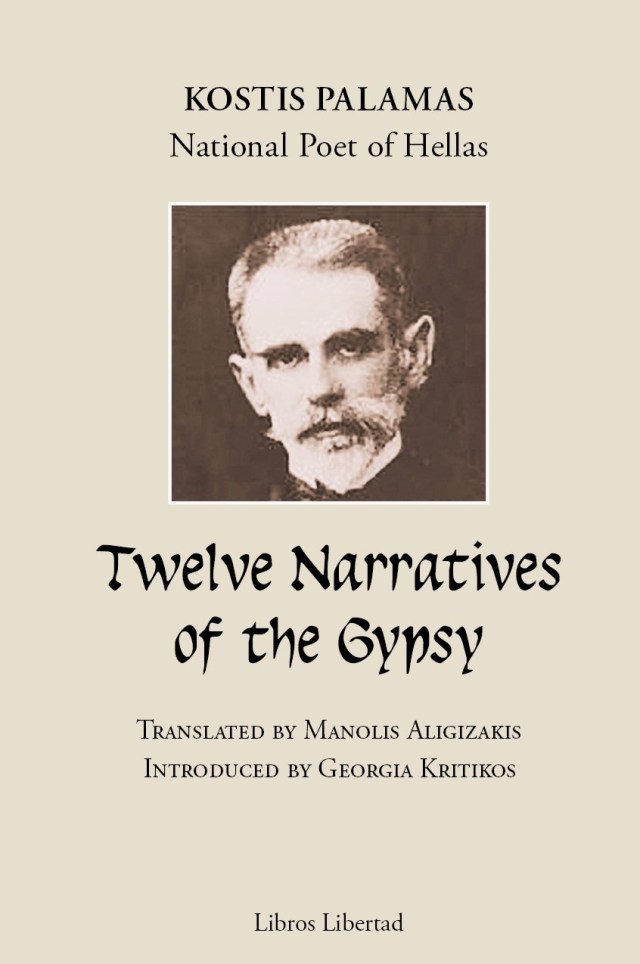
Pip: Manolis Aligizakis runs a site where the ancient and the immediate share a table without much ceremony — gods in the grapevines, desire in the cinema balcony, and families arguing about whiskey.
Mara: vequinox has been busy across poetry, prose, and the complicated territory where love and loss overlap — that's the ground we're covering today. Let's start with Modern Greek Poetry.
The Voices of Modern Greek Poetry
Pip: This segment is about what it means to translate and champion a tradition — to bring poets like Engonopoulos, Seferis, and Ritsos into English and ask what survives the crossing.
Mara: The Nikos Engonopoulos post opens with a poem called "Difficulty," and the line that lands hardest is this: "the difficulty arises when no one of the just people accept the other just — what am I saying — they never appreciated each other."
Pip: That's the tragedy of righteousness in miniature — everyone correct, no one reconciled.
Mara: The anthology Neo-Hellene Poets reaches further back into myth, with Pan moving through the grapevines at night, his reed producing "discordant yet so sweet, hatred mixed with laughter." Titos Patrikios asks how long we carry faces that steadily shrink inside us. Katerina Anghelaki Rooke opens a voyage with the body itself as the departure point.
Pip: Seferis goes looking for a king who left nothing but his name carved in stone, and Yannis Ritsos turns an empty ice cream cone rolled by a blind man's cane into a small catastrophe of attention. Antony Fostieris frames the whole tradition as a noble funeral — poetry burying its dead with official music, waiting for resurrection.
Mara: That's a lot of weight for a reed instrument to carry — but desire carries its own weight too, and that's where the fiction and the lyric poems take us next.
Love, Desire, and the Distance Between
Pip: The question this segment keeps circling is what love actually costs — whether it's measured in longing, in loss, or in the gap between what we say and what we mean.
Mara: The novel excerpt from Redemption sets the stakes immediately. Hermes and the unnamed woman are in a cinema balcony, and the prose is direct: "She took his hand and placed it between her legs, a move he took even further by sliding his hand up and touching her pubic hair. That made her go wild."
Pip: Desire rendered without apology — the body as fact, not metaphor.
Mara: Swamped works the same territory from a different angle — Eteocles and Antonia circle each other at the sea, and the promise deferred to the party that evening hangs over everything. The collection Hear Me Out strips it down to geometry: "We walk on parallel paths going opposite directions."
Pip: Parallel paths going opposite directions — which is technically just two people walking away, but somehow that's the whole of heartbreak.
Mara: Kariotakis-Polydouri frames love as historical tragedy, the two poets remembered as figures who sent signs of fire from their loneliness. Cloe and Alexandra turns the polite exit line "I wish you the best" into an indictment — what the lover really means, the poem suggests, is what's best for himself.
Mara: Rendition finds love in the miniature: a ladybug crossing a palm, "an immense love springs from my river." Tasos Livaditis goes the other direction, into total devotion — "In the tiniest moment with you, I lived all my life." And Wheat Ears names the particular cruelty of someone who tends everything in the world except the lips waiting for them.
Pip: From longing that outlasts the body, the fiction moves into something messier — families, history, and what gets passed down whether anyone wanted it to be.
Fiction's Turbulent Families and Contested Histories
Pip: Across the fiction excerpts, the recurring pressure point is inheritance — what families hand down, what communities bury, and what surfaces anyway.
Mara: In Turbulent Times opens in a hotel gathering where the social scaffolding is doing all the work — introductions, drink orders, careful pleasantries — and underneath it, Nora's unease. The exchange lands here: "You're becoming cynical in your old age, Nora. You need cheering up."
Pip: The diagnosis delivered as a joke, which is how most family diagnoses travel.
Mara: Still Waters puts Tyne on a train, quietly reckoning with class — her fiancé's family is offering a car as an engagement gift, and she thinks, "Maybe I'm out of my league. We're just simple country people." The anxiety is precise and quiet.
Pip: Poodie James runs a different kind of reckoning — a former lawyer living as a hobo, a journalist who's traced him, and a negotiation over what story gets told and on whose terms.
Mara: The Unquiet Land goes further back, into an argument about hubris between Caitlin and Padraig — she defends her father's defiance of the gods to the end, and the exchange is fierce. Arrows moves into historical adventure, a bribed torturer and a leather bag of coins buying someone's freedom through a back exit.
Pip: Straits and Turns and Fury of the Wind both circle men shaped by what they can't say — one a dying man whose last word is desire, one a community holding a secret about what happened in Nimkus. Blood, Feathers and Holy Men reaches across cultures entirely, Norse brothers ransomed back by a First Nations village, negotiating loyalty and obedience in a new world.
Mara: Hours of the Stars and The Incidentals pull back — one a prayer at supper, the other a clown who reaches for the eternal and disappears behind a red curtain, still smiling.
Pip: The curtain closes. The clown never quite touched the stars. That feels like the right place to stop.
Mara: What holds all of this together is the question of what endures — in a language, in a family, in a body.
Pip: The just people never appreciated each other. The parallel paths keep diverging. Next time, we find out what else surfaces.