Avenue I walk alone in the dark avenue holding a black cat in my arms (Perhaps my soul or my fear perhaps my boredom or my craziness perhaps this poem that jumped off the shrubs to my chest like a wildcat). Alone and gigantic on the dark avenue like a hollow bell over the sea of my mind metaphysical flower of my internal garden that is leafed in the darkness aimlessly. I hear the screeching of wheels behind me afraid to look perhaps God is on his bicycle having his evening stroll perhaps the tank of time that flattens me I feel the words melting in the intense fire my past days melt inside of me and I who loved the deepest beauty of life saunter alone in the dark road of my hours smoking the subterranean sorrow of this world that kills itself because of boredom or craziness with a big jump in the gorge of this earth — burning its name in a reverie incising the veins of its hope that water with their most precious blood the leaves of the tree Desperation.
Are you riding your agile mustang dark against dying sun? Rose sky makes a flag of your black hair arms raised in elation as your horse and you jump across the ravine How deep it is holy ancestor how do you fly? Enclave of reserve rears up and gallop of the agile horse creates its periphery outside the fence in the fresh air of the plains now fences deeds break continuity of rolling fields The bison galloping freedom before the cattle fence severs plains from nowhere tunnels destiny and your concerns
The sandy stretch beneath the Mureş River embankment served as the beach. In summer we went there every day on foot, enjoying the water, the sunlight, watching the girls and women as though the order of the world might remain unchanged forever. Back then the watermill still functioned for a while, the one that had once belonged to my maternal grandparents. And the Rákóczi-Kornis castle had not yet collapsed into ruin — it operated as an agricultural school. At school we committed every prank imaginable. Teachers were still permitted to use corporal punishment. We received hard slaps. Șerban’s method was the cruelest: he grabbed the hair beside one’s ear and lifted until the tuft remained in his hand. Others struck our palms with rulers. If we jerked our hand away, we had to stretch it out again until the blow landed properly. Our hands throbbed for days afterward. That was why the favorite punishment was being thrown out of class. Then at least we could find something to occupy ourselves with. It was a mixed-language school, with Romanian and Hungarian classes. Back then the balance was still more or less even. Later the proportions shifted; the Hungarian secondary school disappeared, and even in the elementary school fewer and fewer Hungarian pupils remained. At that time there were no dramatic ethnic tensions. It amounted to little more than the strongest Hungarian boy, Józsi Türke — who later became my brother-in-law — testing his strength against Grecu, the Romanians’ muscular champion. The children circled around them, each camp proclaiming its own warrior the victor. Church holidays meant something slightly different to us children than to the devout believers. At Christmas we went caroling. For weeks beforehand we practiced Christmas songs, sometimes at our house, sometimes at my friend István’s. Amid the many false, whining voices filling the streets, our singing was beautiful, and those who welcomed our carols praised us for it.
…And I discovered something, amid the buzz and clatter of the world, which I grasped and which had kept me over the tempest of the people; it wasn’t work of any feather nor a hand’s waving sign nor was it a castle or any peak stairway is one and climbing is another since the heights existed elsewhere and it was like the unclear waking up from a golden dream that had never stepped on earth and had its source far away spreading further and rising turning into a newborn ghost like ether amid the ether thus I existed on a feather’s lightness and height among the exceptional a special all my youth and my old age exceptionally matching with all seeds and uteri.
The Musician Often during the night, without noticing it, I’d arrive in another city where there was no other but an old man who dreamed that someday he will become a musician, and now he sat in the rain half-naked; he was covering an old, imaginary violin with his coat over his knees. “Can you hear it?” he asks me. “Yes,” I say to him, “I’ve always heard it” while at the far end of the road, the statue narrated the true voyage to the birds.
Response In the tempest’s wrath I longed for a glimmer of hope in the heat of July I seek the tanned smooth body of the woman and the north wind said find your path in your ancestor’s footsteps lean and reverently lift the marble over their gravesite to feel their warmth and I asked the southwest wind where is my sunshine and it said, it hides in your heart
Neither This With these comparisons, he always gets humiliated by jumping from one subject to its opposite or staying in the middle (more or less). He never forgives himself in any position or movement, only from wherever he returns he carries like a loot, and in such a secret pride, a sole grain of rice onto which he incised many war banners, heroes, dead, trees, flags, and that handsome, skinny deserter who was naked in front of the rifle barrels endlessly drummed on his empty water canister.
Finalities Amid the fears and suspicions with an unsettled mind and frightened eyes, we melt away, and we plan how to act to avoid a certain danger that threatens us so gravely. And yet we are mistaken, the danger is not in our way. The messages were false (we neither heard them nor fully understood them). Another catastrophe that we never imagined, sudden, torrential, falls on us, and unprepared, there is not enough time, it takes us away.
Not Assembled Poems Following the existent paths of being humans rise into the myth of life to the end in a new endless voyage many bodies, souls, and dreams buried in deep days and nights the newborn baby cries doesn’t know its origin when the time comes to die it doesn’t know where to it breathes the melancholy of the betrayed kiss a wandering stage show and the night-sailor up high on the sails lights up the enigmas of the galaxy behind him, not assembled poems the mortal eternities in the deep-voiced void of love
Let my kingship unfold the dream of tree trunks negating the crown
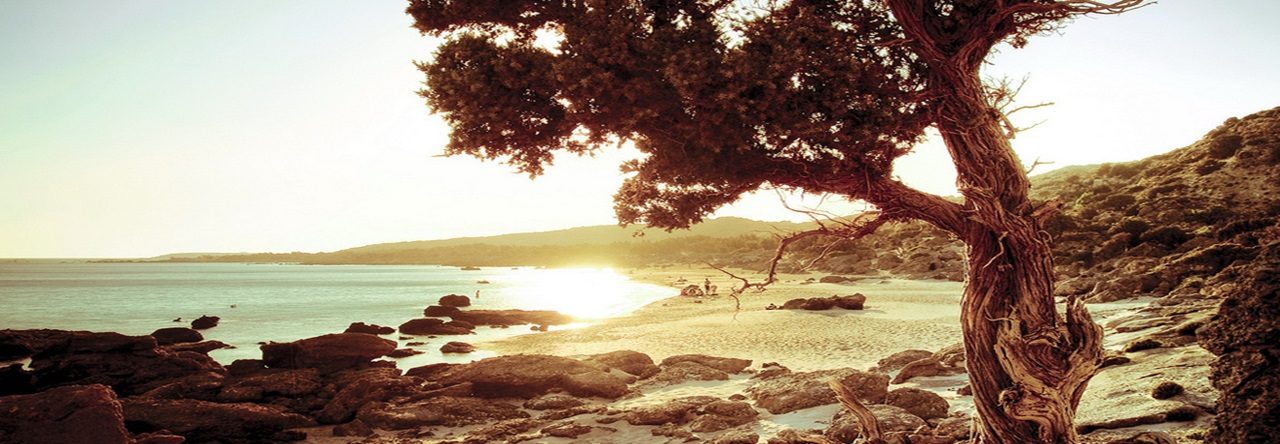
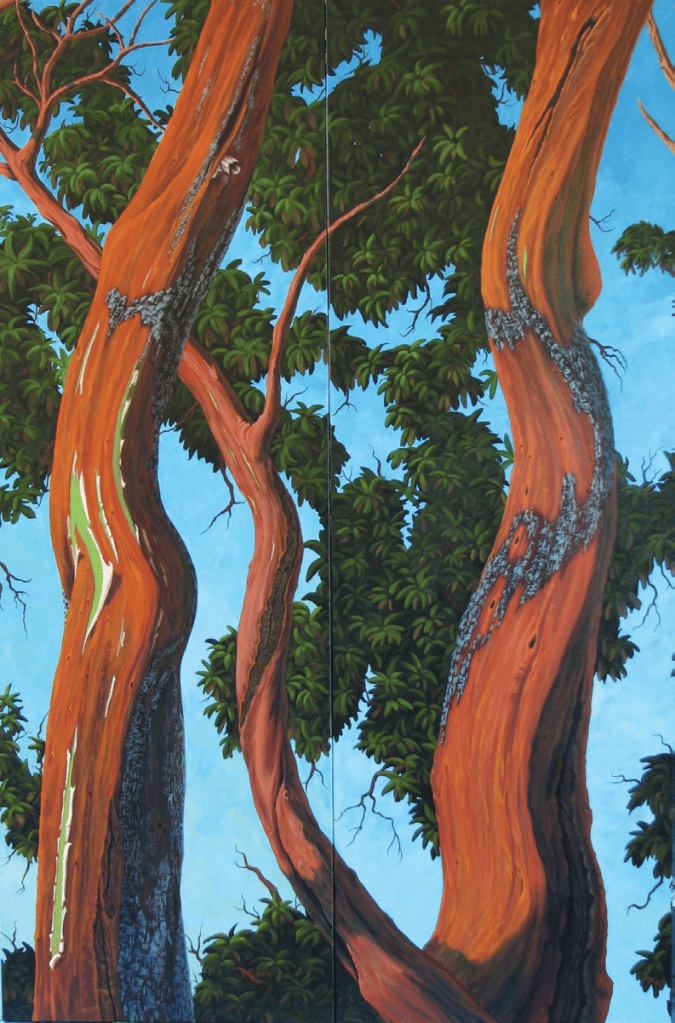
Two bodies interlocked bright reddish trunks firm in resolution to uphold the tree-pneuma benevolent auspice unison in the hug of the breeze sliding amid dark leaves and rustling serenity over rocky promontory gazing the water down where blue and shadows become one like two madronnas challenging the painter’s mind