It’s a dark windy night. Eteocles is about three years old, Nicolas five, and their mother as old as the worry about how to feed her children has made her, as old as any mother who lives in the ruins of war, a woman whose husband is on the front line. It’s a windy night, and the gaps around the frame of the door and the lone window make an apocalyptic music, as if the inhabitants of this hovel are walking through the hallways of hell. Eteocles remembers the scene well. They are sitting around the metal bucket their mother has made into a heating element. She burns wood in it, and the heat reaches out perhaps a meter all around it. They are sitting warming themselves, listening to the wrath of the tempest just a few meters away beyond the frames of the single door and the courageous lone window to the north.
Suddenly from the deadly war of the elements outside a sudden wind floods the room as the door opens. A man stands in the frame gazing inside. It’s their father returning from the war. He stands there for long time, not knowing what to say, how to greet them; he hasn’t seen them for thirty six long months. Their mother lets out a cry, a cry that sounds like the name of the standing man, her husband, the man who had gone to war when Eteocles was just a few months old. Her husband is home at last, and she gets up and calls him inside and walks up to him and hugs him with a fierceness that expresses the emotional volcano boiling inside her. She hugs him for a long time, then she pulls away, and their father kneels and calls his sons to him. Neither of them dares approach this stranger. Eteocles doesn’t know this man at all, while Nicolas, who was two years old when his father left his sons, perhaps has some faint memory of him.
Neither of the two dare move toward the man in soldier’s clothes who calls them again and again until Eteocles observes his feet making small steps toward the open arms of their father and Nicolas follows soon after. The soldier clings tightly to them, saying words the two brothers only feel, the soothing words of a father who has missed his sons, a man who had gone to war without knowing if he would ever see them again. They feel those words, and they cuddle with the man who has come inside their house and ignore the wind that has entered with him and turned the room into a frozen habitat in which the small metal bucket with the burning wood cannot warm more than a meter in diameter around it.
Κι ήτανε κιόλας σα ν’ ακούγαμε τα μυστικά πελέκια μες στο δάσος να κόβουν ξύλα. Ακούγαμε το μέγα γδούπο, όταν σωριάζονταν ένα δέντρο στο χώμα, και τη σιωπή τρομαγμένη να κρύβεται πίσω απ’ τους ώμους μας. Κι ήταν σα να ’βλεπα κιόλας τον Δούρειο Ίππο, κούφιον, θεόρατο, να λάμπει επικίνδυνος μες στην αστροφεγγιά, θρησκευτικός σχεδόν, ενώ η σκιά του εκτεινόταν μυθική στα τείχη. Κι ένιωθα κιόλας σα να βρισκόμουν μες στο κούφωμα του αλόγου, μαζί με τους άλλους, ολομόναχος, σε άβολη στάση, μέσα στο λαιμό του αλόγου, και να κοιτάζω με τ’ άδεια του μάτια τη γυάλινη νύχτα, σαν κρεμασμένος μες στο χάος, γνωρίζοντας πως η χαίτη που ανέμιζε πάνω απ’ τον αυχένα μου δεν ήταν δική μου, — ούτε κι η νίκη, φυσικά. Ωστόσο ετοιμαζόμουνα για το τεράστιο, μάταιο άλμα μέσα στο άγνωστο.
Έτσι, σ’ αυτή τη στάση, εκεί ψηλά, μέσα στο σανιδένιο λαρύγγι του αλόγου, θα ’νιωθα καταβροχθισμένος, κι όμως ζωντανός, να εποπτεύω τ’ αντίπαλα στρατόπεδα, τις φωτιές, τα καράβια, τ’ αστέρια, όλο το οικείο, το τρομερό, τ’ αναρίθμητο θαύμα —όπως λένε— του κόσμου, σα να ’μαι μπουκιά σταματημένη στο λαρύγγι του απείρου και ταυτόχρονα μια γέφυρα πάνω από δυο, το ίδιο απόκρημνες κι άγνωστες, όχθες — μια γέφυρα ψεύτικη, βέβαια, από ξύλο και πικρή πανουργία. (Από κει πάνω, θαρρώ, μες σ’ έναν τέτοιο εφιάλτη, αγνάντεψα πρώτη φορά την πραϋντική λάμψη των όπλων σου).
And it was as if we were already hearing the secret axes
in the forest cutting wood. We could hear the big thump
when a tree fell on the ground and silence, in fear,
hiding behind our shoulders. And it was as if I was seeing
the Trojan Horse gleaming in the starlight, huge, hollow,
dangerous, almost religious, while its shadow spread
on the walls like a fable. And I felt as if I was already
in the cavity of the Horse along with the others, in an
awkward position in the horse’s neck, all alone, seeing
the crystal night through its empty eyes
as if I was hanging over the void, and knowing that
it wasn’t my nape that waved but the horse’s mane,
nor was the victory, of course. Yet I prepared myself
for the endless, futile leap into the unknown.
In this position, high above, in the plank-lined throat
of the horse, I truly felt swallowed, and yet alive and
I observed the enemy camp, the fires, the ships, the stars
all that familiar miracle, as it was called, the horrible,
incalculable miracle of the world, as if I was a morsel
of food stuck in the throat of infinity and at the same time
a bridge over two embankments equally unknown and
precipitous, a false bridge, of course, made of wood
and bitter cunningness.
(from that high vantage position, I think, in such
a nightmare I first noticed the soothing brilliance
Με ιδιαίτερη χαρά έμαθα ότι το βιβλίο ποίησης μου Νόστος και Άλγος, σε μετάφραση στην Πολωνική από τους Mirek Grudzien και Gosia Zurecka, μόλις εκδόθηκε στην πόλη Rzeszow από τους εκδότες Podkarpacki Institut. Ευχαριστώ πολύ τους μεταφραστές και τον εκδότη για την καλαίσθητη έκδοση
I’m pleased to inform all my friends that my poetry book Nostos and Algos, translated in Polish by Mirek Grudzien and Gosia Zurecka was just released in the city of Rzeszow in Poland by the publishers Podkarpacki Institut. Thank you to both the translators and the publisher for the beautiful release.
Θεωρώ το Νόστος και Άλγος σαν το πιο πετυχυμένο μου βιβλίο ποίησης αφού μεταφράστηκε σε 6 γλώσσες κι εκδόθηκε σε 6 χώρες. Στα ελληνικά με τίτλο Φυλλορροές, από τις εκδόσεις Ένεκεν στη Θεσσαλονίκη.
I consider Nostos and Algos my most successful poetry book since it has been translated into 6 different languages and published in six different countries of the world.
The Irishman is in many ways Scorsese’s saddest film. Its central tragic conflict centers on people who, while engaged in violent and heady power struggles throughout their lives, prove wholly incapable of managing basic human relationships and living through the utter ordinariness of life. Scorsese lays the blame for Hoffa’s downfall upon his haughty and […]
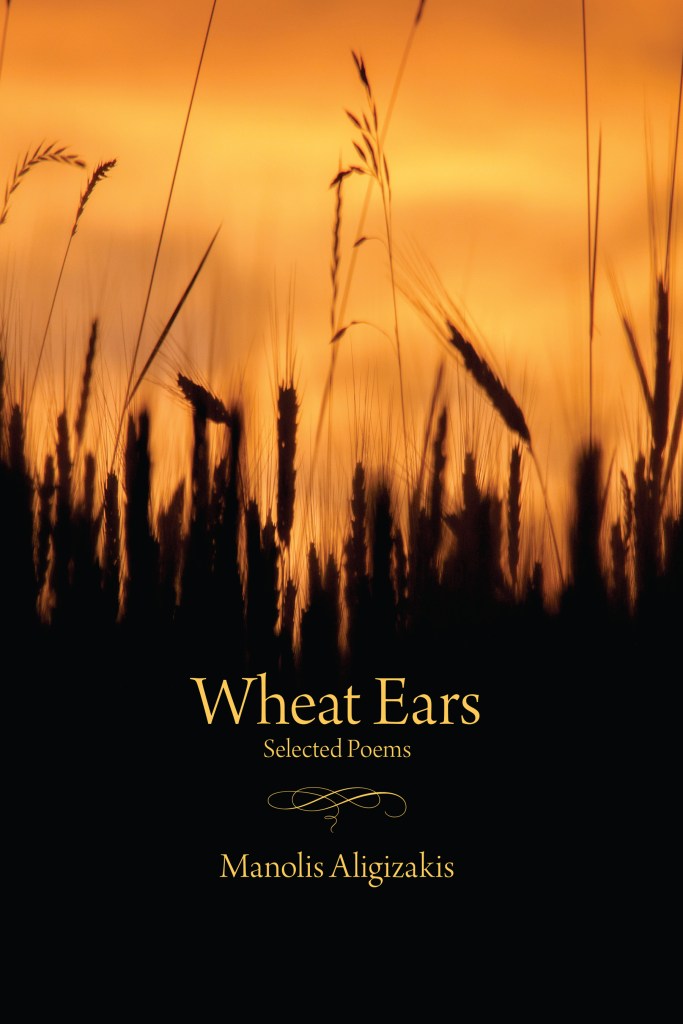
Manolis’ vibrant and radiant poems are infused by a powerful yet subtle music that resonates with the reader who revels for the vitality of the sensuous motion of the language he uses to present images structured in a mixture of Mediterranean and Canadian formats. Poems that make the reader discover the poet’s cosmos as it expands from the microcosm to the universal. Images which declare that everything vanishes as it flows through people’s fingers, yet from all these some become eternal in their wholeness, like the child’s smile which cannot be stained by life’s conditioning, the child’s smile that cannot be blemished by the adulthood’s guilt and banal everyday littleness. Manolis’ poetry stands out among his contemporaries as this poet descends from the ancient modes and exemplary structures from which he draws and which he transposes to us in his personal poetic way.
Emmanuel Aligizakis (Manolis) is a Cretan-Canadian poet and author. He was recently appointed an honorary instructor and fellow of the International Arts Academy, and awarded a Master’s for the Arts in Literature. Born in the village of Kolibari on the island of Crete in 1947, he moved with his family at a young age to essaloniki and then to Athens, where he received his Bachelor of Arts in Political Sciences from the Panteion University of Athens. Aer graduation, he served in the armed forces for two years and emigrated to Vancouver in 1973, where he worked as an iron worker, train labourer, taxi driver, and stock broker, and studied English Literature at Simon Fraser University. He has written three novels and numerous collections of poetry, which are steadily being released as published works. His poetry has been translated into Romanian, Swedish, German, Hungarian, Ukrainian, French, Portuguese, Arabic, Turkish, Serbian, Russian, Italian, Chinese, Japanese, languages and has been published in book form or in magazines in various countries. He now lives in White Rock, where he spends his time writing, gardening, traveling, and heading Libros Libertad, an unorthodox and independent publishing company which he founded in 2006 with the mission of publishing literary books. His translation of George Seferis: Collected Poemswas shortlisted for the Greek National Literary Awards the highest literary recognition of Greece. In September 2017 he was awarded the First Poetry Prize of the Mihai Eminescu International Poetry Festival, in Craiova, Romania.
Available for purchase online via paypal at http://www.ekstasiseditions.com Contact Ekstasis for details or to arrange appearances, events or media opportunities. For further information: Richard Olafson or Carol Sokoloff phone & fax: (250) 385-3378 web: http://www.ekstasiseditions.com e-mail:ekstasis@islandnet.com