“You know why I left. An excuse is irrelevant.” He could see she didn’t like his vocabulary, for which he had already been chastised by Sister Assunta. It’s good you know words, she had said, but you use them with too much pride. If saying what you know to be true is prideful, Rick decided he would have to continue to do it, and take his chances with God. “You know very well that I sent you home because you were a disruptive influence. You simply cannot pay attention and it interferes with the other children.” “I’m sorry to have to say this, Sister, but you know very well yourself that I don’t need to practise as much as the others. I can sight read and I know all the parts I have to sing by heart. And you didn’t send me anywhere, I left.” Her face was a faded parody or horror and spiteful righteousness. “You are a proud and sinful boy!” “I’m just being truthful, Sister. Isn’t it very important to tell the truth?” Rick could see that she was not willing to deal with his question. All she said was, “Well, I don’t know why you’re acting so contrary, but I just won’t have it. Now. If you are truly sorry for the way you have spoken, the Lord will forgive you.” “Forgive me? For what?” “For your sins.” “What sins? Is it a sin to know how to read music?” “Don’t get smart, young man. You know your sins. Disobedience, vanity, willful…” He cut her off. “Is it true that choir is a voluntary extra-curricular activity?” Sister Rose glared suspiciously at him out of her small, pale blue eyes, their pink rimmed lids and short blond lashes flickering with confusion. “Yes, of course, once you’ve been accepted for the privilege. But what has that got to do with anything?’ ‘Just this,” he said. “I quit.
20th of December Not a cow nor a dog in the fields; the collar of the guard is raised; wind blows away the fluff of everything nothing is soft anymore. A woman in the front step of her house lights her heater the wind took her place in the room smell of coal floats and the woman resembles a door. If someone laughs in the wind it’s not because of joy but of insistence; a laughter possesses nothing nor with the fear of possessing anything.
She’s not a bad person. The kids from church call her fast, whatever that means, but she’s not what they make it sound like.” “If you say so. Anyway, you were at her graduation ceremony yesterday. Isn’t that enough?” “It’s not the same thing, Ronnie, and you know it. The party tonight is at her place and it’s just for special friends.” “Well, you’d just better forget it.” Ronnie picked up his mug and got to his feet. “I’ve got to get to work. Morley’ll be ready to start the cutting. And listen, Rachael, give your mom a break and don’t make things harder for her. She has enough to worry about with Aunt Millie being sick.” Rachael’s look changed from one of self-pity to a worried frown. She stood up. “Ronnie, do you think … that is … is Aunt Millie going to make it?” A cloud passed over his face. “I hope so, I really hope so. But only God knows that, and all we can do is pray for her.” He put his mug in the sink, retrieved his cap and went out. Rachael stood for a minute longer staring at the closed door, then she went to the phone to call Lyssa. ͣMorley and Ronald were sitting at the kitchen table when Tyne walked in a little before nine o’clock that evening. Both men turned quickly to look at her. The aroma of coffee drew her eyes to the stove where a pot hissed and bubbled an invitation. Responding to their greeting, she bent to kiss Morley’s cheek. Sensing his intention as he started to rise, she murmured, “Don’t get up, honey. I’ll help myself to the coffee.” “But you look worn out, Sweetheart.” “And you have been working all day in the fields.” She filled a mug with coffee and sat down at the table. Both men spoke at once. “How’s Aunt Millie?”
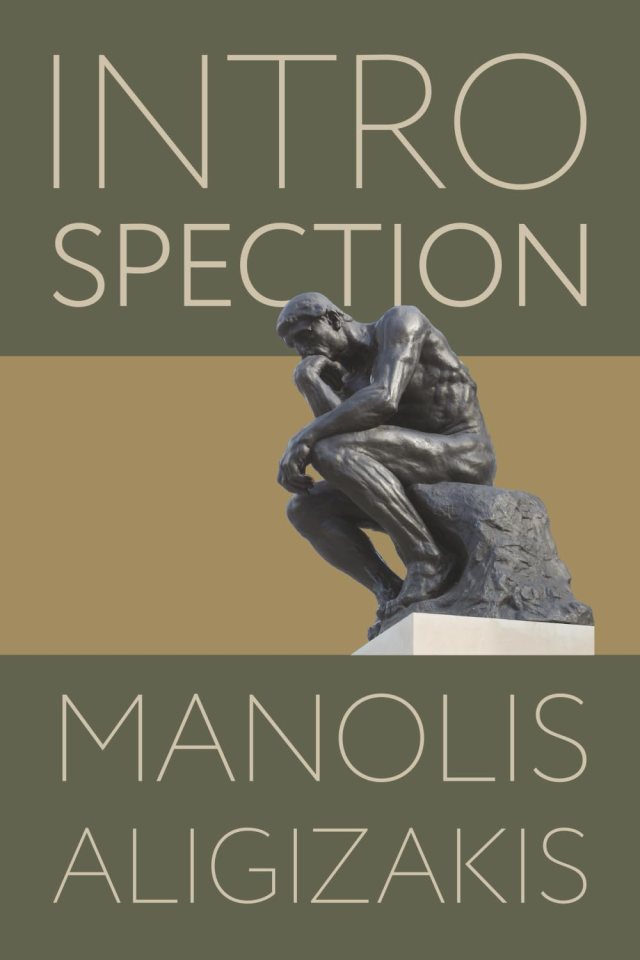
Poetry as a Return to Origins and a Form of Resistance
By Attila Balazs
…One of the volume’s significant achievements lies in its capacity to unite seemingly incompatible registers. Mythology, philosophy, eroticism, biography, personal history, and social criticism coexist in expansive, discursive poetry that at times approaches the prose poem. The language moves from solemnity to sarcasm, from prayer to invective, and from contemplation to revolt.
Images often accumulate with torrential force. The poet does not always seek classical clarity, but rather intensity. He constructs through associations, returns, repetitions, and contrasts. Light and darkness, flesh and pneuma, humility and pride, logic and madness, life and death define one another.
Madness occupies a privileged place within this poetic system. It may represent suffering and psychological rupture, but also freedom from the logic of a diseased world. The madman possesses the right to speak the truth that rational people avoid. The poet and the philosopher stand at the margins of society precisely because they see what others refuse to see.
From here arises the ambivalence of the title Introspection. The inward gaze does not lead to withdrawal or passivity. On the contrary, the inner depths become the place from which the confrontation with the world begins. The self descends into its own viscera, into memory, desire, and the abyss, only to return to the surface with images and truths it offers to others.
Introspection thus becomes a form of responsibility. To know oneself means to know one’s roots, wounds, desires, and contradictions. It also means understanding that individual experience is not isolated, but belongs to a shared history and a common humanity.
The poetry of Manolis Aligizakis is a poetry of deliberate excess. It does not fear great words: destiny, eternity, truth, freedom, immortality, beauty. In an age in which such notions are often viewed with suspicion, the poet recovers them and restores their gravity. He still believes in art’s capacity to change the human being, defend dignity, and save something from death.
At the centre of the volume lies a paradox: the human being is mortal, yet consciousness aspires to immortality; man is fragile, yet dreams of the Overman; he is alone, yet speaks in the name of all humanity. From this contradiction arises the energy of the poems.
Introspection may be read as a symbolic autobiography, a modern epic, a philosophical meditation, or a testimony to the condition of the creator. All these readings are possible because the volume refuses to remain within a single genre or a single era.
Aligizakis constructs his own mythology from fragments of the Greek world, family memory, the experience of exile, and the great questions of European philosophy. Within this mythology, the poet is simultaneously child, lover, fighter, recluse, prophet, and martyr.
At the end of the book, the feeling remains that poetry is his true homeland. It is the place where the past may be revived, where the dead may be summoned back, where love may suspend time, and where the human being may transcend his limits for a moment.
Through creation, the poet does not definitively defeat death, but he refuses to grant it the final word. His traces remain imprinted in language, like the footsteps of his ancestors in the native soil. And the journey from Alpha to Omega does not end, but is transformed into a new beginning.
This is perhaps the true meaning of introspection for Manolis Aligizakis: not an enclosure within the self, but a descent into the depths of being to discover a light that may be brought to the surface and shared with others. A fragile and dangerous light, capable of burning, but also of guiding. A light that bears the name of poetry.
Ready to Give Birth to Forgetfulness The zero exists and it doesn’t eternity is in its space distant root of the sea realities and reflections all the shed blood for sanctified or sinful dreams ecstasy of the flesh in the immensity of life thought that lifts and imprisons crowding of my mind sails, sphinxes and shipwrecks and Eros in absentia soul that flutters my cosmos is always in the cosmos from the foggy gleam of who I am passing memory joins me with the ready-to-die forgetfulness timid and at the same time a hero from the beginning to the end the attempt will be her unfamiliar hand in my hand when time unexpectedly enlivens youth music score that wished to love and guide me to the wind-whipped light will guide me to whom I was in the fleeting footmarks of an eternal Odyssey.
loneliness is immense so that people come in two at a time to endure it. Oftentimes they come three or four at a time of those extra lonely that human comfort calls perverted as if sin and self-humiliation as well as the people’s contempt cover another great shuttering inside them. Thousands of people come daily to meet in these third-class hotels with their mythical, sunken names Atlantis, Mycenae, Europe, New Life and to say that they love each other and want to enter one inside the other since they are cold, they feel cold because of their lost dreams their lost years, memories that don’t want to die thus maintaining the great populace away from its loneliness. And the three middle-aged maids those who make the erotic beds who have never been loved those with the big teary horse eyes forgotten in the snow gathered in the maids’ room like an ancient tragic chorus in front of the propylaea of a dirty sink talk with such forbearance that even the simplest words from their bitter mouths suddenly take the deep gleam of the myths. And they talk of their earnings about the rain, dreams, regrets…
…what beautiful mound hidden under that skimpy bathing suit she wore, the Muse of my day with her flowing brunette hair, her balanced curves, her excellent sized breasts, her exquisite buttocks which she moved in an erotic way unparalleled to any I had ever seen and trust me I’ve seen many, far too many to know the beauty from the average and even more so from the unworthy of my glance and this ethereal beauty walked as if floating over the smooth sand just as my dream of touching those exquisite curves brought me to heavens. Indeed, the ancient Muses were there interacting and playing with her, and I couldn’t see any difference between today’s earthly Muse and the Ancient ones, and here she was turned towards me when, suddenly, our glances met. She sensed that, behind my sunglasses, my eyes were fixated on her ethereal saunter, and she remained focused on me for more than ten seconds: the first acknowledgement. Yes, I was looking at her, and she knew it, and that was enough for the game of love to be played when she went back to her chair and, turning it to the sunshine, she lay her calligraphic body onto the multicoloured towel and gazed at the open water of the quiet and serene cove. I let myself travel along with her glance. I marvelled at the natural beauty of the cove with lapping waves and its whooshing breeze, while I didn’t hesitate to imagine this day’s wonder in the body of the tourist. In her early thirties she represented the female queen of the beach, yes, there were others too, some very pretty as well, yet this one was the special one of who one with exquisite taste, like myself, could easily get himself loose in the imaginary game two people play when the chance arises and this were my thoughts when suddenly the Ammoudara Aphrodite turned her body to her stomach letting the bright sunshine play with her back, from the top of her head to the very lustful buttocks and legs of hers, indeed it was that moment that she stared towards where I was sitting and realizing I was still with her she fixated her glance towards me. I raised my hand and lowered my sunglasses a bit, and seeing her from the top of my glasses, I smiled a full smile at her, to which, to my utter surprise, she also lowered her sunglasses and stared at me from the top of hers.
Pip: Manolis Aligizakis has assembled a catalog that moves from ancient Greek anguish to Canadian prairie winters to stock market schemes — which is either a literary festival or a very ambitious reading list, depending on your weekend.
Mara: vequinox brings all of it together on this site — translations of modern Greek poetry, original verse on love and desire, and a run of novels spanning hardship across continents and generations. Let's start with the poetry coming out of Greece.
Voices From Modern Greece
Pip: The modern Greek poets gathered here are working a particular problem — how do you hold loss, resistance, and beauty in the same breath without one canceling the others out.
Mara: The Yannis Ritsos volume sets the tone early. The poem "The Inexpressible" builds toward this image: "the blind musician, tired, goes back up. He puts his violin case on the chair. He opens it; two of the three glasses are in it. They are shining and whole."
Pip: So the broken things you carried out in guilt come back intact — the poem turns on that reversal, the indestructibility of what you thought you'd lost for good.
Mara: Constantine Cavafy's "Che Fece … Il Gran Rifiuto" works a related tension — the great No that is right and still burdens its speaker for life. Nikos Engonopoulos in "Goalpost" pushes into civic dread, asking whether the Sunday bells will be followed by hymns or machine guns.
Pip: Engonopoulos lands the ambiguity without resolving it, which is its own kind of answer.
Mara: Tasos Livaditis in "Simple Talk" insists on plainness as survival — speaking, loving, dying "in a simple way." George Seferis in "The Shape of Fate" asks who orders destruction from behind, and Titos Patrikios watches a man of creative mind reduced to counting whether his wages last the month.
Mara: Antony Fostieris names "certain pain" that strikes the empty heart beyond all desire. The Neo-Hellene anthology and the Troglodytes collection round out the range, from birch-forest dawn to an invocation of the Goddess to purge the ego entirely.
Pip: Ten poets, one through-line: the thing that survives is rarely the thing you expected to keep.
Mara: The love poems take that survivorship somewhere more intimate — let's move there now.
Love At Both Edges
Pip: The love and desire poems here are not soft — they treat longing as a force with weight and consequence, something closer to weather than to sentiment.
Mara: "The Incidentals" opens the territory directly: "the seething angst of lust demands her body's contours and dark caves on the altar of Aphrodite deserving unemotional dedication, like any archon sitting up high, like any God jealous or self-absorbed and relaxed."
Pip: Desire framed as liturgy — the body as offering, the worshipper as functionary. That's a cold altar.
Mara: "Hear Me Out" pulls in the opposite direction emotionally but lands in the same isolation: two people on parallel paths going opposite directions, past the point where they first met, with only the roundness of the earth as any possible reunion.
Mara: "Wheat Ears" compresses the whole arc into image — "two bodies defining the shape of a monad," synthesis as astronomical and emotional at once. "Rendition" closes it with a line that strips possession entirely: "Of all you have amassed, none is yours."
Pip: Love, desire, and ultimately the inventory comes up empty. The novels take that emptiness and put it in a house with bad insulation — let's go there.
Novels Of Endurance And Reckoning
Pip: The fiction here keeps returning to people held in place by circumstance — weather, pregnancy, poverty, complicity — and asking what they do with the time they cannot escape.
Mara: "Fury of the Wind" makes that literal. Sarah, isolated on a prairie homestead through a brutal winter, moves house plants to the kitchen table each night to keep them from freezing, writes letters that take weeks to arrive, and waits. The passage reads: "she missed the companionship of others, especially Penny. What would she give to be able to sit down to a cup of tea in Penny's cheerful kitchen?"
Pip: A cup of tea as the full measure of what isolation costs. That's a precise kind of grief.
Mara: "The Unquiet Land" puts a different kind of waiting at its center — Mother Ross, who knows Caitlin is pregnant before the wedding, removes her own mother's ring from her finger and gives it to Michael for the ceremony. She hears Caitlin sobbing upstairs and swallows her own agony whole.
Pip: Respectability as ransom, as Mother Ross calls it — and she's already paid her installment.
Mara: "Water in the Wilderness" moves the tension into a seedy hotel corridor, Tyne's knees going weak as she waits for a deteriorated Corky Conrad to open his door. "Prairie Roots" grounds everything in the farming community's frank hierarchy — survival first, schooling second, and a father who insisted otherwise.
Mara: "Jazz with Ella" sends Jennifer onto a plane into a storm, retreating into questions about why she was chosen over Paul for a Soviet Union language tour, and what it cost her in salary to say yes. "Introspection" and "Hours of the Stars" work in verse — the first building toward "the final, greatest monad," the second catching grandparents' long faces at a christening where the names chosen feel like paganism to them.
Pip: Naming a child wrong, apparently, is its own form of hardship.
Mara: "In the Quiet After Slaughter" and "Poodie James" both circle institutions — policing and journalism respectively — where the people inside them are just competent enough to see the problem and just constrained enough to struggle with what to do about it. And "Swamped" drops into the financial world, where Eteo watches Platinum stock move and starts making his list of who gets rewarded.
Pip: Every novel here is about someone watching a system from just inside or just outside it, trying to figure out the angle of least damage.
Mara: Which is, when you step back, exactly what the Greek poets were doing too — just with fewer stock tickers.
Pip: The thread running through all of it is endurance — the blind musician climbing back upstairs, Sarah moving the geraniums, Cavafy's speaker living with the right No.
Mara: And the question underneath: what holds its shape when everything else breaks. More of that in the next episode.
The Inexpressible The city was all lit under its evening sky; two fiery red stars were inexplicably flickering up high. Windows, the bridge, the roads, taxis, the buses. “I also had a bicycle,” he said. “I could dream,” he said. In the room, the woman looked elsewhere, didn’t say Anything; her dress was ripped on the right side; if you lifted it slightly, her leaning shoulder would show. As far as the others, they are not mentioned, he said, you hide them like broken glasses. When the garbage collector comes, you take them down alone with a guilty eagerness, early in the morning, the beautiful glasses wrapped in old newspapers and carefully not to hit the railings of the stairs, since they still echo with a deep, piercing sound, that unbroken sound tuned to the sound of the windows, the air, the walls. Then the blind musician, tired, goes back up. He puts his violin case on the chair. He opens it; two of the three glasses are in it. They are shining and whole.
Goalpost He heard the bells tolling and the vibrations of the bronze that pierced the clear Sunday morning air he wondered why the tolling will be followed by hymns, joy and songs or machine guns will echo horribly spreading destruction all over? I’m only saying this: we’ll all run to the goalposts, boys to the goalposts in vigil sleepless guards always ready glancing here and there be prepared that the goals won’t start like rain and we’ll be defeated







 Manolis Aligizakis