Wellspring of Love

excerpt

“Oh yeah, Grandma Milligan rang. Said she’ll call you later.” She
swung around to face Tyne. “Is there any mail? Anything from Pa?”
“No, I’m afraid not, honey.”
Rachael shrugged. “Yeah well, I guess he’s more interested in his
new family now.”
Tyne walked over to the girl and put her arm around her. “Oh
Rachael, I’m sure that’s not the case. He’s likely busy getting them
settled, as well as going to work every day in the railway yard.”
“I know, Mom, but he used to write at least every two weeks before
he married that woman and took her kids on as well.”
Tyne frowned and withdrew her arm, but kept her voice gentle.
“Rachael, Margaret has a name. Please don’t refer to her as that
woman. She seemed very nice when we met her, and I’m sure she’s
going to make your pa happy. Don’t begrudge him that.”
Rachael sighed. “Okay, I’m sorry.” She hesitated, then blurted,
“Mom, can I go to Lyssa’s tonight after supper? She said she’ll come
pick me up.”
Tyne’s eyebrows drew together. “You were there just two nights
ago, honey. Is there something special planned for tonight?”
Rachael shrugged. “Naw, just hanging and listening to records, I
guess. Please, Mom. It’s Saturday night. Lark’ll be there, too.”
“What about your Aunt Ruby? Will she be at home?”
Rachael hesitated. “I … don’t know … that is, I don’t think so. So
Lyssa says we can have the house to ourselves and play the record
player as loud as we like.”
Tyne took a deep breath. Should she give Rachael permission to
go to the Harrisons’ when there were no adults at home? Although
Lyssa considered herself an adult, Tyne would be far happier giving
Rachael permission to spend an evening with fifteen-year-old Lark
than with the precocious eighteen-year-old sister.
“Mom?”
“We’ll ask your dad when he comes in from the barn. If he says it’s
okay, then you can go. But I want you home by half past ten.

https://draft2digital.com/book/3562917

https://www.amazon.com/dp/1926763327

Yannis Ritsos – Poems, Volume III

14th of November
As we focus our eyes to notice a difference
among the pieces of day, we don’t know how to get
a hold of ourselves, we miss the shape, the hour, colors,
faces. We only listen carefully so that we might
discern a sound that confirms the passing of time,
so we can reverse the performance, box, broom handle,
name, the dice that roll on the table,
the limping wind that stumbles onto the barbwire
the fork that hits the plate and its sound that continues
internally.
Otherwise a circle without a center remains, a whirl
in the air with no movement but its own;
it can’t become a car tire that crosses a forest
and if once it becomes a square
it’s not a window through which you look at the world
or the three lined carpentries in an unfamiliar
neighborhood,
but only the relativity of straight lines, the analogy of corners,
boring, very boring things. A mathematician and
an astronomer could create something concrete and
clear out of all these.
I can’t. Yet I always liked the Observatories; the dark
stairway, the clock, the telescope, those photographs
of stars in homely positions: Orion without his sword,
with no underwear, Verenice with her many freckles,
unwashed, frumpy, a whole urban kitchen
transferred to a metaphysical location, boiling cups,
jugs, casseroles, the grater, salt cellar, baking tins,
white spots, a bit of steam hanging onto the smoked
walls of the night.
Someone was talking of numbers and more numbers,
light-eons, leagues and leagues. I wasn’t listening.
Today a friend was telling me that when he was thirteen
he was selling oranges and lemons in Piraeus;
he also had a young Armenian friend who was selling
socks. During the summer afternoons they’d meet in the
harbour behind a pile of sacks, where they’d put down
their baskets and read poems; then they’d eat a sesame
bread ring and an orange and gaze at the sea, the jumping
fish, the foreign ships.
From today I also have a friend who smells of orange
and harbour. He keeps many evening whistles of ships
in his pockets. I see the movement of the big finger
of the big harbour clock on his hands. From today on,
I’ll love him, I’ll unbutton one of his coat buttons.
Now I think of going to find his young Armenian friend
to find a basket with socks on the road, to cry out, socks,
beautiful socks, cheap socks. At noon, I’m sure I’ll find
the Armenian youth behind the sacks, I’ll get to know him;
he’ll recognize me since we both have the traces of our
common friend’s eyes on the lips. If I missed that
basket with the socks and the one with the lemons I
wouldn’t know how to fill my day, my words,
my silence.
Yet I believe every comrade wishes to have such a basket,
only that I don’t know where to find it and I get angry and
I search.

https://www.amazon.com/dp/B096TLBNFK

Small Change

excerpt

The Best of Friends
ALL I KNEW ABOUT ETERNITY in those days came to me through the agency of its little cousin, boredom. It was Friday and it was spring. The big windows on the left side of our second floor classroom had been lifted as far as the old paint in their grooves would allow. All afternoon, an intermittent breeze came through the protective metal grill carrying coal gas and bus fumes and the oddly fishy odour of soap from the Colgate factory down by the river. It wasn’t much, but it was news from the world and I sniffed it with a perverse pleasure.
We weren’t allowed to look outside, but as often as I could I snuck a peek at the vacant lot with its bottle chips, rusty concrete, patches of crabgrass, and minute particles of coal that lay in thin drifts where the wind had blown them from the smoke of locomotives that passed all day on the elevated tracks across the street, beyond the wooden fence of the Delaware-Lackawanna coal yard.
Sister Violeta, with her lugubrious monotone and her black visions of life before death, seemed connected somehow to the nearly purple hills (piles, really) of pea coal, which I had a privileged view of at this height. They looked like black sand blown up into dunes in the desert landscape of an alien planet. I used to imagine she had been hatched there.
Father Brackendorf, who came every Friday to teach us religion, was fond of looking out toward the coal yard and explaining that our souls were like the snow before a train went by. Once we were born, the soot came down. Scrubbing did no good. You had to let confession melt the snow, and let the sin fall to the bottom. (The bottom of what, I wondered). Then a blast of grace would freeze it white again. This is what he was saying now. It made me feel empty and restless. The clock above his head, round and white and edged with black, was soft-clicking back and hard-clicking forward, minute by minute. And then the minute hand hit twelve and it was three o’clock, and we were free.
But there was this debt I owed to Danny Amoroso.
He was three or four years older than we were, but he was slow. And he seemed to enjoy it. Being slow, I mean. He was a titan among …

https://www.amazon.com/dp/1926763157

The Qliphoth

excerpt

Nicholas:
Special Withdrawal Unit
I have to get it all down. For the record, the Akashic Record of the Aeons, naturally.
Wherein all our phantasms are inscribed, squiggles of amoebic neon in
the starry darkness, every damned thing we’ve done radiating across eternity
like an old broadcast of Journey into Space on its way to the Pleiades.
And I have to set the angelic record quite straight. Writing very carefully.
Not my usual psychedelic scribble—letterforms in doodles of wild purple,
loopy loan-words on the run—but disciplined blocks of sensible words,
arranged thus, line after neat line in my black-and-red Notebook, made in
Taiwan but purchased for me at the hospital shop right here at Oakhill, sunniest
hotbed of sanity in all Devon, as Doctor Jago says, whenever he tries to jolly
us along.
It’s very civilised, “. . . considering, after all, Mr. Beardsley, it is a locked-up
ward, yes?” He allows me the privilege of unlocking my old word-hoard in its
frumpy box of smelly brocade, my little shop of curious relics. I’m permitted
this verb therapy, joining up my grown-up writing. Better this, certainly, than
farting in the day-room all day, like old Beddowes, or wandering about strumming
a cardboard cut-out guitar, which is the preferred pose of Rog, or Rod,
or Rob, or Ron—I haven’t yet made out his name, because our mass dosage of
Largactil makes everybody’s speech slurred.
In fairness to Beddowes, such drugs doth make great farters of us all, our
sulphurous bursts of bad air permeate the lower heavens . . . Perhaps it’s really
Beddowes’ high boredom quotient that’s against him. His preferred interpretation
of reality is that he’s Headmaster of a large inner-city comprehensive
school, that our day-room is his staff-room, and that we, fellow-clients of the
Special Withdrawal Unit, are his backsliding, incompetent staff.
“You’ve no control,” he wags a warning finger several times a day, “no control
at all of your juvenile criminal elementals. Young people committing
problems of evil, terrible state of things in the toilets, boys with knives, and
tinsel in their hair, hair everywhere . . . Look what you have permitted at the
end of the day, you with all your beards and long hair . . .” With me he always
permutates the same set phrases, beards and all. Even the stuffy acoustic of the
day-room can’t take the edge off his abrasive burr, but it goes nicely with his
jowly blue-shaven red face and bald scalp with plastered licks of thin hair.
He likes to grab some old copy of Plain Truth Magazine, and he rolls it up to …

https://draft2digital.com/book/3562839

https://www.amazon.com/dp/0978186508

The Unquiet Land

excerpt

“Damn!” Finn said and rose slowly to retrieve the bottle that had come to rest against the granite hearth. “Damn, damn, damn,” he repeated, lifting the bottle to the light to see what was left. “Did you ever witness such a clumsy old fool?”
After a moment’s awkward silence, Padraig said, “You were talking about Caitlin.”
“I was, wasn’t I?”
“Is there really something between her and Michael?”
“I think so. It’s usually called love.”
Padraig failed to stop the thought before its shadow fell across his face. “She’s in love with Michael?”
“She appears to be. And I think she could do worse. Michael’s a good, steady, dependable lad. A farmer to the depth of his marrow. He’s one of the Carricks from Kildarragh. Thomas Carrick’s son, but as different from Thomas as a ripple from a tidal wave.”
“I’m glad.”
Finn smiled. “You’ve heard the stories about Thomas Carrick then.”
“As much as I want to hear.”
“You’ll hear worse, Padraig,” Finn said. “You’ll have to learn to accept life and people as somewhat lower creations than the idealized figments of your Christian imagination. But have no fears about Michael being Thomas Carrick’s son. I took Michael in on the recommendation of Seamus Slattery, Michael’s uncle. And it has worked out well for everyone: for Michael himself, for me, for Caitlin. Even for Jinnie who loves him like a son. As he appears about to become. He sneaks in here on his midnight adventures and thinks we don’t know.”
“On his what?” Padraig asked with surprise.
Finn smiled. His eyes had the faraway look of one who had dived deeply into the river of memory and was swimming joyfully. “His midnight adventures,” he repeated slowly, his attention not fully on what he was saying. “When he thinks I’m sound asleep he creeps like a thief to Caitlin’s room. Lusty young stallion.”
Padraig’s disbelief was genuine that a father could allow such conduct. But none of his prepared texts on the subject seemed appropriate to this man who had no idea of morality. How could he begin to reach through to the soul of one who denied God, despised chastity, and did not know the meaning of sin and salvation. “We change the soul, if we change it at all,” Clifford Hamilton had said that evening, “with words, thoughts, ideas…

https://www.amazon.com/dp/1926763203

Water in the Wilderness

excerpt

“They’re missing, Tyne. They’ve run away. Ruby and Bill thought they might be here.”
She fell into the chair by the desk. “Dear Mother of God, no,” she blurted. “Where … how long?”
“They were gone this morning when the family got up. I don’t know what time that was, but the kids must have left in the dark. At least there’s one piece of good news … the eldest boy, Ronald, is probably with them.”
Tyne’s relief was short-lived when she realized the boy was probably not yet twelve years old. And the weather … oh, dear God in heaven, no. Even strong, adult men had been known to lose their way from barn to house in a blizzard.
“Morley, the weather … how bad is it?” She choked on a sob. “It looks like a blizzard from here.”
“Tyne… honey, try not to upset yourself. I know it looks bad, but they’re probably with a neighbor, or someone who saw them and took them in. Ronald’s old enough to know to go for help when the weather turned bad.”
“I know, Morley.” She drew in a calming breath. “Please, take care of yourself. I wish I could be there to help you at the barn, and make your dinner.”
“I’ll be fine. And listen, Tyne, I don’t want you to leave the hospital. Please tell me you’ll stay there. There must be somewhere you can sleep.”
Tyne stifled a sob. She didn’t want Morley to know how scared she felt – scared for the children and scared for him alone on the farm with animals to look after. She gave herself a mental shake and set her mind to gain control of her emotions.
“Tyne, the first thing I’d like you to do is call your parents and Aunt Millie to tell them about the kids. Ask them to alert people in their area. Oh wait, is there any possibility they could have gone to your mom’s? You’ve taken them there a few times. Maybe Rachael remembered the way.”
“No, I don’t think so. If they had gone there, Mom would have called either you or me.”
“Yeah, I suppose.” He sounded deflated.

https://draft2digital.com/book/3562884

https://www.amazon.com/dp/192676319X

In the Quiet After Slaughter

excerpt

But their censure didn’t weaken her resolve. She savoured my
father’s embarrassment — and cursed his having been conceived
every step of the way home.
He drank with old navy buddies at one of the Canadian Legion
branches and foolishly denied doing so. He attempted to disguise
the alcohol on his breath with Halls Cough Drops. Tobacco fumes
clung to his clothes like an invisible lint. Sometimes my mother
alleged the scent of woman.
On occasion, it was true, my father would take off for a few days
—to where, no one knows. Going absent without leave guaranteed
an intensified resumption of their conflict at some future date. The
air in our house crackled in anticipation of the rematch.
Once, to regain entry, he claimed to have gone angling with
friends.Mymother circled him warily, a dog sniffing a fire hydrant.
– Lying bastard!
Punishment often entailed his eviction from their bedroom. Banishment
could stretch from three days to three months, depending.
He appeared relieved to be sentenced to an air mattress on the living-
room floor. Because mybrother Burt and I often took myfather’s
side, it was self-serve in the kitchen until a truce was reached. Our
body weights fluctuated accordingly.
I viewed my father’s carousing like this: he was born during the
First World War and orphaned in the Depression. He spent the best
part of his 20s fighting the Second World War. I reckoned the occasional
disappearance was his way of making up for lost time.
People sometimes remarked that my parents seemed to have little
in common. This may have been the case. But there had to be a reason
they were able to cohabit for as long as they did. I think they
were joined together, as many unions are, by the sum of their unfulfilled
expectations, and because as the years passed, options
decreased and habits fossilized.
My parents, you see, were either in love or at war. Rancour
seemed an aphrodisiac. There was no Switzerland, no neutral
ground. It was the one thing they seemed to agree on: the enemy of
love is indifference.
My mother, in anticipation of their evening fete, had passed the afternoon
tethered to the dresser. Her features had been transformed by …

https://draft2digital.com/book/3562874

https://www.amazon.com/dp/B00731WSPE

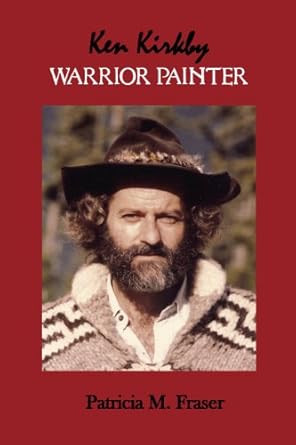
Ken Kirkby, A Painter’s Quest for Canada

excerpt

same feeling about you as I had about where that puck would be.”
“I want to help you,” he said one day over lunch.
“I’d appreciate all the help I can get,” Ken said. “There hasn’t been a
helluva a lot of it at this point.”
“Yes, so I gather.”
Virgil Pires, a tall Portuguese man, became another frequent visitor.
“You come from my country,” he said when he introduced himself.
“You’re almost Portuguese. I love what is in the papers and on TV. You
talk about my country with so much love.
“I wasn’t born in Portugal,” Ken said. “But I think that part of my soul
is Portuguese.”
The collection of paintings for the show grew, most of them featuring
an Inukshuk standing sentinel over the stark Arctic landscape. Irving and
Virgil visited almost daily, moving the paintings around, discussing the
merits of each one, and arguing about who should purchase which. Virgil
liked to say proudly, “He’s Portuguese, you know.”
Irving argued, “Portuguese, my ass. He’s no more Portuguese than
I am. He’s a mongrel – Danish, Irish, Spanish, French, Italian, Jewish
grandmothers, Christian grandfathers – grew up in Portugal – I tell you,
he’s a mongrel!”
“Oh no!” Virgil protested. “This is brilliant! This is magnificent! It was
written in heaven! This man has a place in heaven!”
Ken painted, working in a world he was entering for the first time.
These visions of the Arctic had been bottled up inside him for years, and
a great dam had burst open, spilling out a Niagara of creativity. The faster
he painted, the more powerful the pictures.
The week before the show, Irving and Virgil began to choose the paintings
they wanted, arguing good-naturedly over several of them. “You
can’t have them all,” Ken said. “You can only have twenty paintings!”
“Between us or each?” Virgil asked.
Were they serious? Ken wondered, beginning to feel excited. “Each,”
Ken said.
He had completed ninety-six canvases. Virgil and Irving fell on them
with the glee of schoolboys who had just been told they could choose a
dozen of any sort of candy in the store. They argued, talked, and wrangled
possessively over one or two of the larger paintings, until each had a
pile of twenty. “How much?” they wanted to know.
Ken forced his voice to remain calm. He studied each painting and methodically
wrote the price on a slip of paper. The forty canvases totalled
eighty-five thousand dollars.
Neither man flinched. Instead, they insisted on a celebration, and over
a bottle of good wine, Ken explained that their paintings would be part of
the exhibit – and he recalled one of Alex Fraser’s pieces of advice.

https://www.amazon.com/dp/0981073573

https://draft2digital.com/book/3562830

Poodie James

excerpt

“Seen Ray Thompson?” the man said.
“No, I expect he’ll be back in a few minutes. Anything I can do
for you? I’m Pete Torgerson.”
The ranger gave no sign of recognition.
“I have a message for Ray. Got a call up at the station. Only
phone around here. Know where I might find him.”
“He’s over at the dining hall.”
“Thanks,” the man said, and left.
Torgerson sat on Thompson’s bunk and leafed through a tattered
copy of Life, trying not to think about the boy. Five minutes
later, Thompson was back.
“Pete, I have a problem. The ranger station got a call from my
neighbor in town. My wife had an appendicitis attack. She’s in the
hospital. I’ve got to go down there right now. It’s going to burst if
they don’t operate. I want to be there when she comes out of the
anesthetic. There’s no one up here but kid counselors, and I can’t
leave one of them in charge. I hate to ask because I know how
much you’ve got on your hands, but….”
“You don’t have to ask. Go on. Just stop by the garage. Tell
them what’s happening, and have them give Sue-Anne a call.”
“If I can’t get back up here tommorow, I’ll have the Y send
somebody to take over. Noon, at the latest.”
“Run along, Ray.”
“Razor and all that stuff above the sink. Sorry I don’t have pajamas
for you. Don’t use ’em. Lights out at ten o’clock. You might
have to quiet ’em down.”
“Don’t worry about it. We’ll be fine. Scoot.”
In the log dining hall, Torgerson lined up with the children and
the counselors to shuffle past the steam table. A solemn woman in
a hair net and a white uniform ladled chipped beef on toast and
canned peas onto their trays. He thought of the army. After dinner,
he wandered over to a corner of the hall where a counselor sat
at an old upright piano playing a sonata he recognized but could
not name. She looked fifteen, maybe sixteen, he thought, and from
the back a little like Sue-Anne. When he came home, his wife was

https://www.amazon.com/dp/B08W7SHCMV

Swamped

excerpt


Today is one of those times. After school, the two sides gather in
the school yard and make all the customary arrangements: putting
goal “posts” in place, deciding who will play what positions, and
drawing straws to see who has the ball first. Then the game commences.
On this day, they play for half an hour and are tied two goals
apiece before all hell breaks loose when Nicolas scores a goal the
other side calls “out,” and Nicolas and his team insist it was a fair goal
and the other team shouts in unison, “Asshole,” which is all the trigger
Nicolas needs to land a couple of good blows with his fists on the two
nearest kids on the other team, and then they all take part in their ritual and fight, and not even a sudden shower of rain can stop the
upper village kids fighting their age mates from the lower village until
three or four from each side have bleeding noses and bruised arms
and faces. Nicolas of course is the keenest fighter on the upper village
side, and he manages to inflict most of the damage on the enemy
until everyone has had enough of fighting and the two teams go their
separate ways
They may be tired of fighting, but their blood is still boiling, and
this is why, when far away from the school grounds, the upper village
kids turn at the side of the hill, from where they cannot be seen from
the school anymore, take off their shoes and socks, lie down on the
wet soil, and give the lower village kids their open hands and toes.
This is their fiercest act of defiance. It is the height of ridicule in this
part of the world to be shown the open palm of another and especially
when even the toes and soles of the feet take part in the insult.
Afterwards, in their respective houses, the children from both
sides have to contend with their mothers’ angry questions: “what has
happened to you?” and “who have you been fighting?” and “why have
you got into another fight?” and “how many times have I told you
not to do this?” These are questions they have all heard many times
but that never stop them from repeating their ritual.
On another day the boys go hunting, all geared up and ready. It
is the middle of July, as hot on Crete as it is every July, and they leave

https://www.amazon.com/dp/B08WP3LMPX