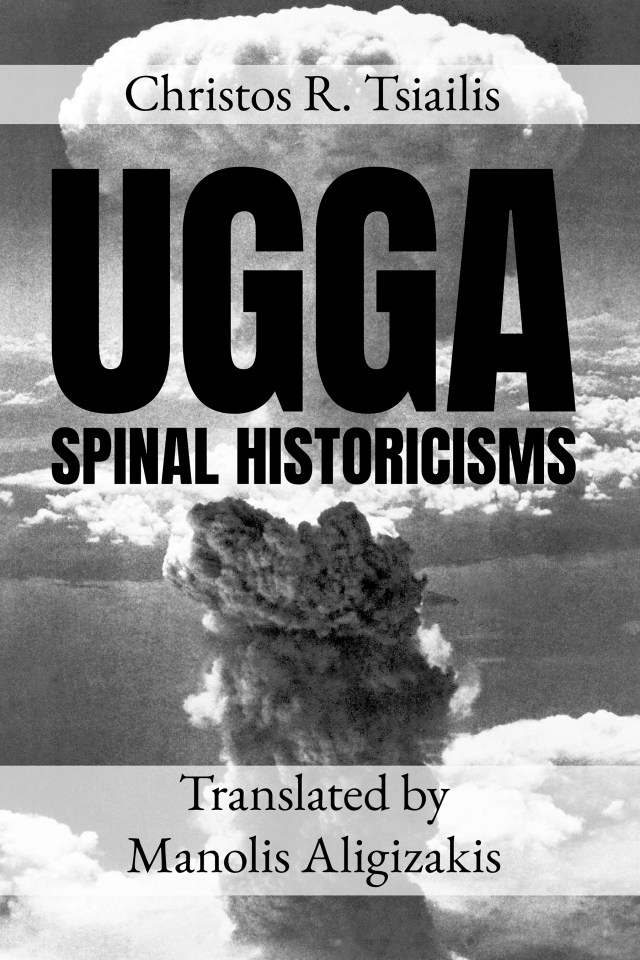
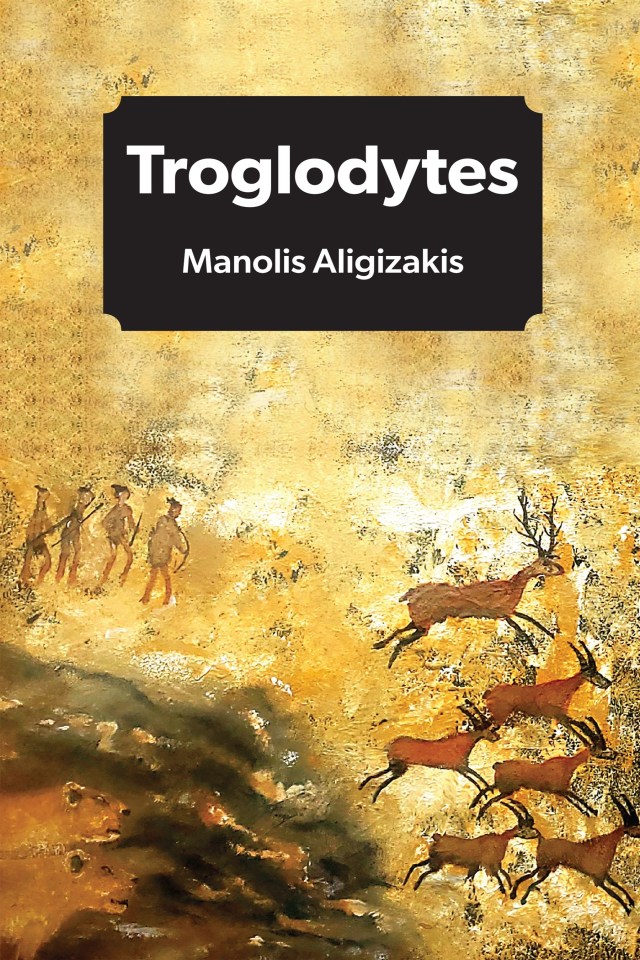
twenty-five Two hundred and fifty thousand years before zero all the Mitochondrion Eves fight inside the same Paradise in a valley strewn with gigantic bones until one overtakes: the first Mother. On the same day the first democracy is established the first church inside the cave the club higher in the hand of the first, powerful symbol of authority for the same purpose they all vote for the one Cave Master since the Homo Erectus devised the appropriate submission as a bequest to the Homo Antecessor.
The strengths of Nuances lie in its imaginative range, its ethical seriousness, and its refusal to divorce lyric beauty from social reality. Aligizakis writes with a notably visual imagination. His poems are saturated with colour—red, white, azure, pewter, gold, black—and with tactile materials such as stone, flesh, wind, water, cloth, metal, and wood. His diction frequently reaches toward the elevated, incorporating mythological, religious, philosophical, and erotic vocabularies. This can create a heightened, ceremonial tone well suited to the collection’s central concerns.
At times, however, the density of the language can work against precision. Some poems accumulate images so quickly that their syntactic or emotional centre becomes difficult to locate. Certain abstractions—“meaning,” “glory,” “freedom,” “opulence,” “greatness,” “void,” “dream”—recur frequently, and their force is strongest when grounded by the concrete material world that the book handles so well. The collection’s most effective poems are often those that allow a particular object or scene to carry the argument: a doll with a missing arm, a rusted bicycle, a flowerpot, a park bench, a syringe, a tank, a food court, or a coffee cup.
This is not a weakness so much as a productive tension within the poet’s poetics. Nuances want to make large claims, but it is most persuasive when those claims emerge from a small, exact image. Its best work reveals how philosophical inquiry can remain rooted in the body and in ordinary experience. The collection’s frequent shifts between sublime imagery and everyday detail are not accidental. They express a central conviction: human beings do not encounter death, love, violence, religion, or freedom in abstract space. They encounter them in rooms, streets, kitchens, workplaces, hospitals, public squares, and landscapes.
Nuances, therefore, are best understood as a collection of ethical lyricism. It asks readers to attend to the shades of feeling and responsibility that are often lost in public language, ideological certainty, or personal habit. Its poems are willing to be sensuous, rhetorical, mournful, comic, politically alert, and metaphysically restless. At its strongest, the book demonstrates that nuance is not a retreat from moral seriousness. It is a way of seeing more clearly: of recognizing that every claim to beauty contains a history, every gesture of love includes vulnerability, and every act of violence leaves behind a world which language must struggle to describe.
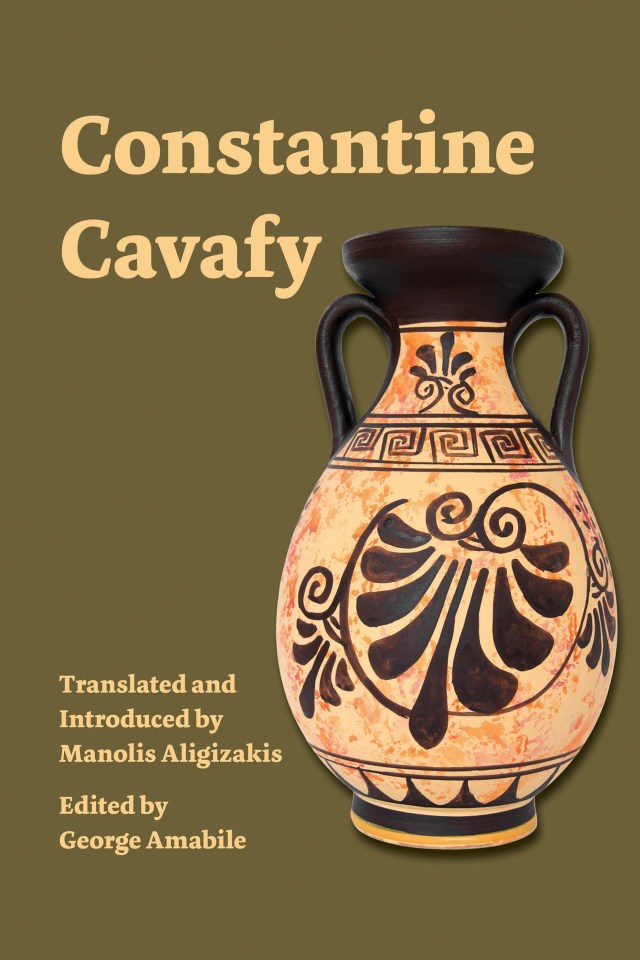
Ithaca When you start on your way to Ithaca, pray that your journey will be long, full of adventures, full of knowledge. Do not fear, The Lestrygonians, the Cyclopes, or the angry Poseidon, you will never run into things like that, if your thoughts are kept high, if a clear excitement moves your body and your spirit. You will never meet the Lestrygonians or the Cyclops or the angry Poseidon unless you carry them in your soul, unless your soul raises them before you. Pray that the way is long. Let the summer mornings be many when you will enter with such pleasure, such joy, harbours you have never seen before; may you stop at Phoenician markets, to buy their fine merchandise, mother-of-pearl and coral, amber and ebony, and pleasurable perfumes of every kind, as many as you can get. And may you visit a lot of Egyptian cities, to learn and go on learning from their scholars. Always maintain Ithaca in your mind. Arrival there is your destiny. But don’t hurry the trip at all. Let it last for many years and when you reach the island, and you are old, rich with all you have gained on the way, do not expect any further riches from Ithaca. Ithaca gave you the beautiful voyage. Without her, you would never have started your journey. She has nothing else to give you. And if you find Ithaca poor, Ithaca has not tricked you. You have become such a wise person, with much experience. You already understand what Ithaca means.
Here he was again. The start of another shitty day. As he lay in bed this morning, there was only one thing that could distract him from the pukey feeling rumbling deep in his stomach and the piercing pain in his head. If he had the story right, he had been fired the day before. Him. The consummate professional engineer. Once the senior engineer that everyone at Empire had come to count on over the years. And now? Now he had been “relieved of his responsibilities,” as the letter of dismissal so clearly stated. The letter. Yes, there it was on the floor. So then it must be true. For the first time in twenty-five years Joel was waking up without a job. And knowing how soiled his reputation would be after word got out about his dismissal, he probably wouldn’t want the kind of maritime engineering jobs that would be offered to him now, even the scraps that new grads wouldn’t accept. And maybe he wouldn’t even get those. Yesterday was pretty much a blur. He remembered being fired. He remembered walking back to his apartment through the crowds and the humidity. He remembered stopping at the street-level bar just around the corner from his place. He remembered the first rum and coke. He remembered the woman, or maybe she was a girl. But that is all he remembered. The rest was a blur. God only knows where he went and what he did from there. Somehow he had made it back to his apartment, alone and not mugged.
I am dragging… I am dragging inside me this picture, burnt upon my retina: the most horrible document of the Mariupol Maternity Department: the very last moments of a completely wounded mother’s self. The young woman, just here, on this ruin-and-smoke decorated photography, left the tortured earth. Five men tried to save – in vain – the life of the dying mother and the still in her womb dwelling child. First I hopefully tried to cling and cling into the ambiguous sight of the black polka-dotted, red and besides green-edged textile, blood-soaked lying on the sad stretcher; a bedcover, to a children’s room fitting. But it helped nothing, nothing.
…to maybe hunt proud bison on plains of your tribe still when you’ve gone home to your loved mother who cherished your upbringing dressed your first kills soaking the corn seeds smiling and your father counts them with care before hoeing them under earth you give thanks for her endless nourishment foreigners complement the dreams of nature infinite-seeming sacks of corn the giant company’s seed breeding out your own exiles rewrite maps offer corn whiskey for furs and reserves to hide the hungry
There was one more obstacle to overcome: O’Donnell couldn’t drive. Rule #5 stated membership would not be considered unless the applicant possessed a legal driving certificate. He took advantage of Dodge down time to familiarize himself with the machine. Whenever the car slumbered he sat behind its wheel practising the smooth shifting of gears, learner’s manual resting in his lap, the glossy, air-brushed wantonness of Ed Levine’s calendar girls an encouraging audience to his lofty aspirations. He approached Pete Dombrowski about his chances. The longtime club member had dropped by Ed’s garage to replace a gasket. O’Donnell held a light. – How long before I’m in? – Depends, kid, Dombrowski said. Maybe never. – What’s your guess? Gimmee a ballpark. Dombrowski slammed the hood and wiped his hands. – Members decide by secret ballot. That waiting list? It don’t mean nothin’. – I’m getting my licence soon, O’Donnell reminded him. Dombrowski slid in behind the wheel and fired up the car. The engine roared to life. – Don’t go celebratin’ yet, squirt. Soon O’Donnell had mastered the clutch. At every opportunity he stole runs around the block. After only a few weeks he was driving as far as the municipal line. Mr. Levine was frequently waiting for him when he returned to the garage. The two had an unspoken agreement. The senior Levine wouldn’t inform the membership of my friend’s unauthorized excursions if O’Donnell remained silent about Mr. Levine’s afternoon liaisons with a certain housewife. O’Donnell says that pressure to influence the outcome of the draw was especially vigorous the first Sunday in May, as Car and Driver magazine invited all interested associations to enter a vehicle in the Spring Festival gala. The winner that particular Sunday had the privilege of powering the Dodge along the flower and bunting-bedecked…
Defences If at some time one comes near you and lays his defences by your feet do not trust him. The true knights don’t yell nor do they wear armour they don’t joust noisily they just stand on the side they observe they feel your moist sorrow and very softly they caress your hair.
Escape He sat on the stool by the front yard; his hands, so clumsy, had already overtaken us. “Someday they will demolish the house,” he says to me “and they’ll discover it.” And every so often, at the far end of the room, someone wrapped a bed-sheet around himself; it was the time he escaped until the bed sheet fell empty on the floor, and we had a friend forever. In the stations, the immigrants were lined up and, hiding inside their their overcoats, they waited for the voyage like a dog on its deathbed. And uncle Elias, our rich relative, years after his death, still stood on the sidewalk, however, he didn’t turn to look at us. “Uncle,” I said, “Since you knew, why did you come back?” “I can’t fall asleep,” he says to me, “I still have to lose some more.” I tried to leave, but I met the deaf boy on the side street; he was leaning on the wall, and he was crying, and now there was a small lit chapel on the wall while snow fell outside, and passersby drowned in their words.
I The lucidity of rose petals suffuses as the wind ripples and caresses the dunes of praying sunlit trees dressed in their primeval innocence and abundant feeblemindedness as the creeks lovingly murmur songs to one another and Heaven whispers lullabies to virgins not yet kissed other than in dreams, when one buries his forefathers under the big oak at the forlorn edge of the village abiding with nature’s peace commanding the birth and death in one breath, all creatures crawl eastward, life lingers in light the greater the number of peaceful days the higher the oak of death irresistibly climbs and the first ode swings in transparency.