Podcast Episode: Greek Poetry And Human Longing

Pip: Manolis Aligizakis runs a site where exile, desire, and the weight of history all show up before breakfast — and somehow that's a normal Tuesday.

Mara: vequinox has been posting across a wide range of work lately — modern Greek poetry translations, fiction excerpts, and a philosophical essay on what imagination actually does. That's the territory we're covering today.

Pip: Let's start with the poetry, which is where most of the weight lives.

Voices Out of Exile and Time

Mara: The thread running through these poetry posts is displacement — from homes, from language, from time itself. The question is what survives when all of that is stripped away.

Pip: George Seferis opens the answer with something almost architectural. The setup is a poem called "A House Near the Sea," and it earns its length.

Mara: The poem earns it. Here is the spine of it: "Houses, you know, grow easily resentful, when you empty them."

Pip: That line does a lot of quiet work. The house isn't a metaphor for loss — it is the loss, with feelings of its own.

Mara: And the Yannis Ritsos volumes — both Volume IV and Volume VI — push that further into the political. Volume IV's "Without Counterweight" puts it plainly: "All the flags are torn to the whole length of time and there isn't one on a balcony to lower half mast."

Pip: Flags, torn. Nobody lowering anything. That's not elegy — that's indictment.

Mara: Tasos Livaditis, in Poems Volume II — longlisted for the 2023 Griffin Poetry Prize — turns inward. The observation that cuts is this: "each person keeps the key to their prison in their pocket and pretends to have forgotten it."

Pip: So the exile isn't always political. Sometimes it's the one you've arranged for yourself.

Mara: Antony Fostieris, in Selected Poems, takes that further into paradox — "In my future time, I'm already dead, fresh and dead in my darkness." Alive and dead simultaneously, in glassy cities that sink into clouds.

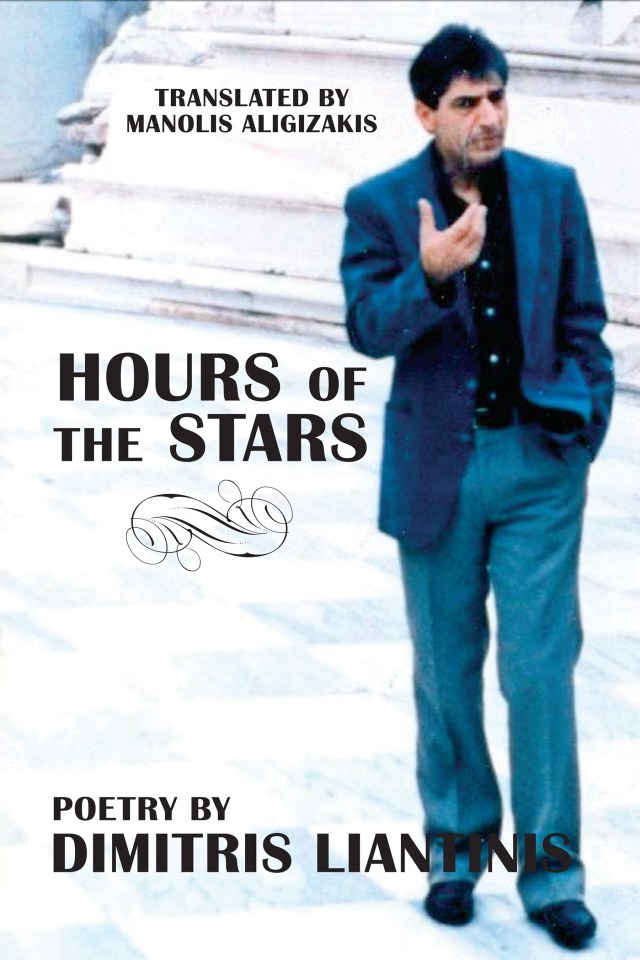
Pip: Hours of the Stars and the Neo-Hellene Anthology pull in the other direction — toward light, toward a "solemn and beautiful stranger" welcomed until exhaustion, toward wild lilies and the nectar of April lips.

Mara: Entropy frames the whole range: "between the minimal and infinity." Second Advent of Zeus traces selfhood back to its cellular origin, and Titos Patrikios distills community into six lines — seed, acorn, oak, path, forest.

Pip: From houses that resent you to forests that remember you. That's quite a range for one tradition.

Mara: The fiction posts ask a different version of the same question — what does a self do under pressure? Let's go there.

Fiction at the Edge of Endurance

Pip: The fiction excerpts here aren't comfort reads. They're interested in what people do when the situation is genuinely impossible — and how quietly that can happen.

Mara: Straits and Turns opens with a CIA agent named Bradley arriving home after a long flight, his life running on institutional routine, two years from retirement. Then: "he smelled the strong alcohol odour all over the…" — and the excerpt cuts.

Pip: The ellipsis is doing real work there. Everything before it is procedural calm, and then the floor drops.

Mara: Water in the Wilderness takes a different register entirely — warmer, more fragile. A boy named Bobby with missing fingers, escorting an elderly woman through a hospital door with his shoulders erect and head held high. The damage is visible; the dignity is louder.

Pip: And then Redemption lands its immigrant quietly in a three-by-four-meter room with paint peeling off the walls, trying to order food from a menu he cannot read. The stakes are enormous and nobody is shouting.

Mara: Gospel of Silence is the one that swings hardest. The narrator describes choosing "the rebellious Christ" over "the hermits' Christ who resigned himself to everything" — and then his father beats him with a wooden ruler until it shatters.

Pip: He endures it without a sound. That detail is the whole book in one sentence.

Mara: In Turbulent Times catches a family holiday collapsing in slow motion — a son counting down the minutes before he leaves, his mother's voice going "shrill, like the high-pitched squeal of scraped metal." The Qliphoth goes stranger, into an occult archive kept by a psychiatric patient who has memorized forbidden lore.

Pip: Poodie James brings a dead mayor, a woman who doesn't cry, and piano music that might be Chopin. Nostos and Algos asks the plainest question of all: if love is there and you won't give it, "why are you still breathing?"

Mara: Across all of it, the body under pressure — institutional, familial, historical, self-imposed — is the constant. The desire to escape, and the question of what you carry when you do, runs right into the next theme.

The Body That Desires and the Body That Endures

Pip: Red in Black is reviewed here, and the review makes a distinction that matters: the strongest poems are the ones where the beloved isn't just observed.

Mara: The review puts it directly: "The poem's lyric force comes from mutuality." When touch and transcendence are shared gestures rather than one person's projection, the erotic becomes something more durable.

Pip: What this means in practice is that desire without mutuality is just description — and description alone doesn't hold a poem up.

Mara: Red and black move through the collection as moral categories, not just colors — passion and industrial damage, the body that wants and the body that gets worn down. Wheat Ears lands the same collision differently: a phone call from someone already buried, their laughter roaring through the wire.

Pip: Hear Me Out takes it into the digital — "I started falling in love with you, without even knowing you." Same ache, different medium, same unanswerable questions about what's real.

Mara: Which is also, quietly, a question about imagination — what the mind constructs when the body isn't there. That's exactly where the essay goes next.

What the Imagination Actually Does

Pip: An Essay on the Structure of the Human Imaginative takes on a question that's been wrong since Aristotle — what truth means when you're talking about poetry.

Mara: The essay argues that Europeans have reduced truth to correspondence with empirical fact, and that this is a fundamental error. It goes back to the Greek word Aletheia, drawing on Heidegger: "Aletheia is understood as unconcealment, the state of being disclosed."

Pip: So the upshot is that a poem isn't lying when it doesn't match the facts — it's doing something the facts can't do, which is disclose what's otherwise hidden.

Mara: The essay is careful to say this isn't a call to revive ancient Greek philosophy wholesale. The point is that the dominant model of truth has narrowed what we allow imagination to count as real — and poetry pays the price.

Pip: Every poem in this episode is, in some sense, an argument for that claim.


Mara: Houses that grow resentful, bodies that endure, love that arrives by wire — and underneath all of it, a theory of what imagination is actually for.

Pip: Same questions, next episode. The site keeps publishing.
Gospel of Silence

Excerpt

At first, the face of love for me was the humiliated, broken,
rejected barefoot beggar. Later a quiet rebellion nested itself in my
heart; by then I had grown irritated by helpless love that endured
everything, by the sour stench of passivity, by the endless swallowing
of humiliation. Instead of the hermits’ Christ who resigned
himself to everything, I chose the rebellious Christ.
When I arrived home on the day of the awards ceremony, I found
my mother crying. My father was delivering one of his endless
monologues in a pitch far higher than natural, intoxicated with
himself, circling endlessly around his own words.
“Where were you?” my mother asked.
Silently I handed her the certificate.
“What’s this?” my father tossed out indifferently. “Be first in
your studies!” Then he threw it aside.
That same day, when I was supposed to leave for the reward excursion,
my father attacked me with the long wooden ruler for some
reason — today I no longer remember why, perhaps there was no
reason at all. He beat me until the ruler shattered into pieces. I had
only one aim: to keep the blows from reaching my face. I endured
it without a sound. I looked at him with cold hatred and with a cruel
kind of pity, watching the shameful, helpless rage pouring out of
him. That only enraged him further. He could not bear that I never
humbled myself before him, never begged forgiveness the way my
siblings did. I could not ask forgiveness for something I did not feel
was a sin.
It was around then that the desire to escape awakened within me.
I stepped outside my body, and from then on observed the entire
inner and outer chaos from a distance, the world struggling with
its external and internal laws, and within it my own self, stripped
of meaning. Instinctively I kept away from artificial intoxication
— alcohol, drugs, anything of the sort — not out of virtue but out
of self-defense: I was terrified of losing sight of myself even for a
moment.
Later I tried to direct both myself and my surroundings through
carefully planned or improvised scenarios. At first it was a game;

https://www.amazon.com/dp/1926763874

Antony Fostieris – Selected Poems

In my Future
Come then
to my future time when you won’t find me
however, do come
pull the thread of all events that will take place
exhaust me to the final possibility.
The current returns and I melt
with the cities and the reddish buildings
stones and roofs melt
the metal of my voice
too.
A heavenly light floods me
most shining
dead light
black.
Come then
to my present past
come then
not death, sleep, beyond flesh
not expiation
cauterize this laughter
cauterize this side of me
stop the smile, the futile heart
the infrared blood.
In my future time, I’m already dead
fresh and dead in my darkness
not forgetfulness, memory, truth,
I’ll think, I’ll tell you, I don’t know,
I love you, until when, never,
not yes, not no
I, a rider, jump over exquisite hurdles
valiant rider in glassy cities
alive and dead
that sink in clouds and clouds
which perhaps yes, perhaps no.

https://www.amazon.com/dp/1926763653

Water in the Wilderness

Excerpt

…ently held out his hands to her. His missing fingers did not seem to faze him; he appeared to be learning to compensate for the loss.
“An’ you know what, too, Auntie Tyne?” He gazed up at her when she stood, his eyes like saucers now. “Rachael says we’re goin’ home on the really biggest old bus she’s ever seen, with a long dog on the side.”
Tyne chuckled. “You sure are, Bobby. And when Uncle Morley and I come home you’ll be able to tell us all about it. Okay?”
Solemnly, he nodded his head then offered his hand to Tyne’s mother. Shoulders erect and head held high, he escorted her through the door.
A few days later Emily Milligan brought the children back to the Holy Cross, to say goodbye before starting their trip home to Emblem. Tyne took them to see Morley. Following Sister Carol Ann’s gentle instructions, they approached the bed quietly, and stared in wonder at the man they scarcely recognized as the jovial person whom they called Uncle Morley. His hair had grown a little so that he didn’t appear bald anymore, and the bruises around his eyes and cheeks had faded to a pale yellow, tinged with blue. But Tyne knew that he must look strange to the children who were seeing him for the first time since the beating.
She had been of two minds about bringing them to his room, but Morley had asked to see them. And when he opened his eyes and smiled at them, she knew she had made the right decision. There was something she and Morley wanted to do together before the kids left for home.
“Do you … have the gifts, hon?” Morley asked haltingly.
Tyne removed a large bag from the bottom of the bedside table. Opening it, she drew out a brightly painted dump truck followed by a Shirley Temple doll. The looks on the faces of Rachael and Bobby brought tears to her eyes.
When they had gone, Tyne took Ronald to a quiet waiting room. He had tried, without success, to hold back the tears. She wanted to hug him, but knew he already felt embarrassed because of loss of control over his emotions, so she sat quietly by his side and let him talk.
“I wish I could go with them, Mrs. Cresswell. Do you think the doctors will let me go soon?”

https://draft2digital.com/book/3562884

https://www.amazon.com/dp/192676319X

Straits and Turns

Excerpt

Necrophilia
Bradley reached home late at night after a long flight, during which they experienced their fair share of turbulence. He knew this flight so well after twenty years of taking it, since he started working on the East Coast, and his house was in Los Angeles. He also knew most of the American Airlines personnel; he had an account set up by the Bureau and always flew this airline. And tonight, Georgia, the flight attendant, offered him a second glass of wine and a good plateful of food, which he relished to the last crumb. Being with the Bureau for so long, he almost did everything as part of a routine, a repetitive action, from the time he’d call to arrange his reservation to the arrival at the airport and to the airline counter where most of the girls recognized him and always served him the best way.
The agency took care of all the bills, it was part of his contract with the CIA and no one ever raised an eyebrow at what he submitted; it was times when he thought of having something extra, something the bureau wouldn’t even bother to look into, however, Bradley was a common sense man and always did his side the best and fairest way possible to make sure he wouldn’t disturb any waters a couple of years away from his retirement.
When he got inside the house, he noticed there was no sound, other than the ventilation system humming its rhythmical music. Brad was so tired that he took off his shoes and went upstairs to their bedroom, only to find his wife, Beth, asleep, even though he had informed her he was on his way home. Undressed, he slipped under the bedcovers when he smelled the strong alcohol odour all over the…

https://draft2digital.com/book/4250839#print

https://www.amazon.com/dp/1926763866

Redemption

Excerpt

He walked back to the rented room and settled in his new home. It was
a small room with a table, a chair, a closet for his clothes, and a single
bed. The size of the room was no more than three by four meters,
with paint cracks all over; some paint had peeled right off the walls.
He didn’t really care about its condition. It was a very cheap room.
A small window with shutters opened to the street, and Hermes
saw a small garden. He took out his clothes from the suitcase and
hung them with care in the closet. He, then, sat down on the bed and
thought it would be a good idea to write home and let them know he
had arrived and was okay, three letters to three different addresses.
Realizing he had no paper, he walked out to the closest corner
store, where he bought some paper, a small jar of coffee and a small
rectangular box of sugar cubes, which he encountered for the first
time in his life. He went back to his room and sat at the desk to write
his first letter to his uncle and untie. He described in detail that his
trip was very good, the city was beautiful, and he felt enthusiastic
about the university. He wrote with intense feelings, particularly
in the second letter, addressed to Magdalene. He signed the letters
and sealed the envelopes. He would post them first thing tomorrow
morning. Hunger took over him. He got up, knocked at the
door of his landlady and asked where he could find a restaurant to
eat something. She informed him that “Black Cat” was the closest
restaurant to the house and told him how to get there. Hermes got
out and walked the few blocks to the restaurant. The server brought
his coffee. Hermes understood that coffee was served each time, even
before an order was given to the servers. He looked at the menu, but
he couldn’t understand the words; therefore, he didn’t know what to
order. He had his coffee and a cigarette. The girl refilled his cup and
looked at him with questioning eyes. He pointed to the menu and
said, “I don’t know what these are…” his finger travelling down the
list of food items. The young server asked him,
“What language does he speak…” He said, “Greek,” she called
him to follow her. He got up and followed the girl through a hallway
to an opening that connected the restaurant to the kitchen.

https://draft2digital.com/book/4172538#print

https://www.amazon.com/dp/1926763858

Twelve Narratives of the Gypsy

Thus I became a copper-smith.
The furnish gleams as
the breeze blows in it
the insatiable fire is ready
to consume everything
flame embraces the steel
its echoing roar springs out
of its hungry teeth like
a tamed lion like a sprite
and the immovable anvil
and the fast pounding hammer
commence a thunderous battle
hammer becoming the creator.

https://www.amazon.com/dp/B0D3LP7NW6

Hours of the Stars

Libra
Solemn and beautiful stranger
you who undress
the salute and the sun to the bone
who sow the side of a daydream
as our hours unfold
and salute you
with feathers of winds they gleam
with songs for the sea’s birthday
they salute you
as our lust sinks
shooting stars seagulls
in the hourglass of your laughter
volunteers of the ancient epic
with its circular returns.
Solemn and beautiful stranger
you are welcome till you exhaust yourself.

https://draft2digital.com/book/3562939

https://www.amazon.com/dp/1926763408

Wheat Ears

Phone Call
Your voice sounded abrupt
echoing strangely on the other side
of the telephone line
you rekindled our last conversation
reminded me of our last meeting
during that autumn
brown leaves over
the lone grave site as
I was disturbed with
the red carnation on your lapel
didn’t expect your phone call
your voice obviously hesitant
while your laughter roared
through the wire like
the cold sweat poured
over my whole body.
Strange, I didn’t expect you
to call so soon: it was day
before yesterday
when we buried you

https://draft2digital.com/book/3748127#print

https://www.amazon.com/dp/B0BKHW4B4S

Yannis Ritsos – Poems, Volume IV

Without Counterweight
Disgust, he said, disgust; seal your ears, your nostrils,
your eyes. To hear what? To see what? Seven bullets, eight
bullets.
And the killer killed, same as the other, here and there.
Where can you look? What can you juxtapose?
All the flags are torn to the whole length of time and
there isn’t one on a balcony to lower half mast.
Old newspapers float on the water next to the drown men.

https://www.amazon.com/dp/1926763815